
Info@Knottedrug.com


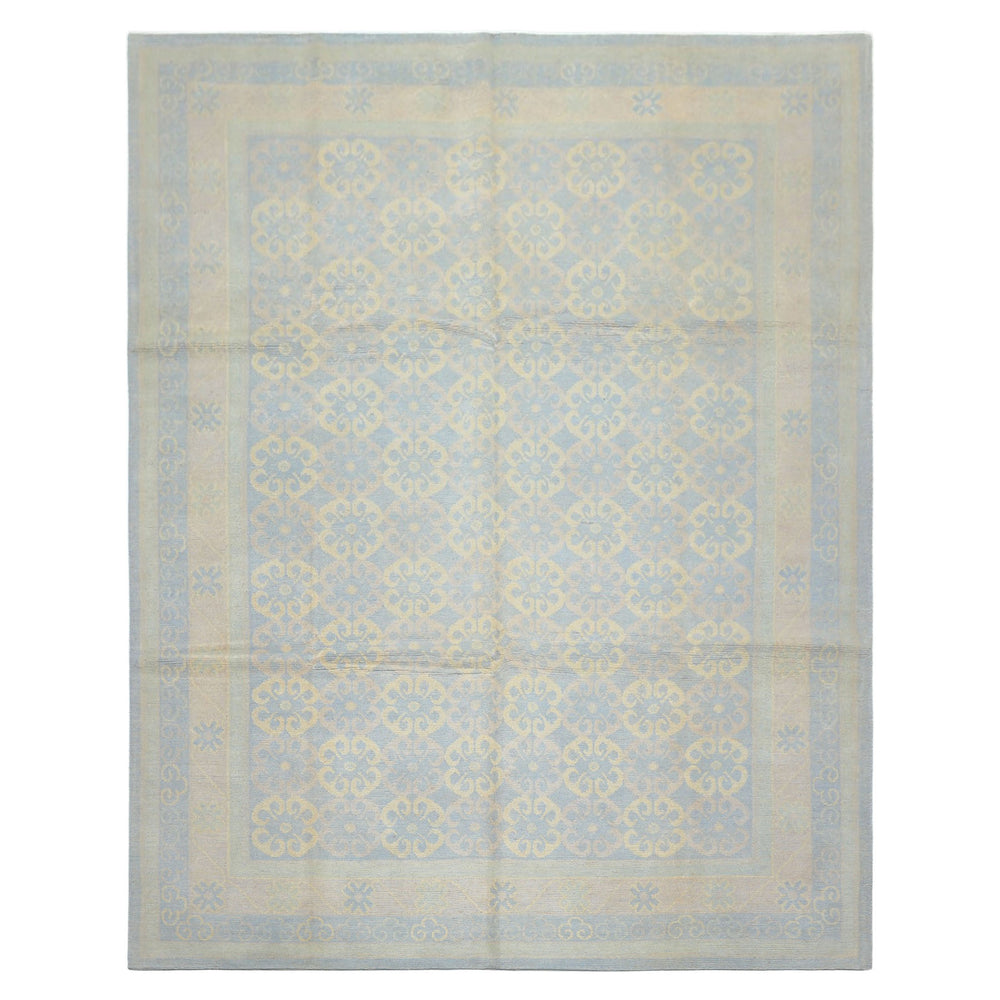
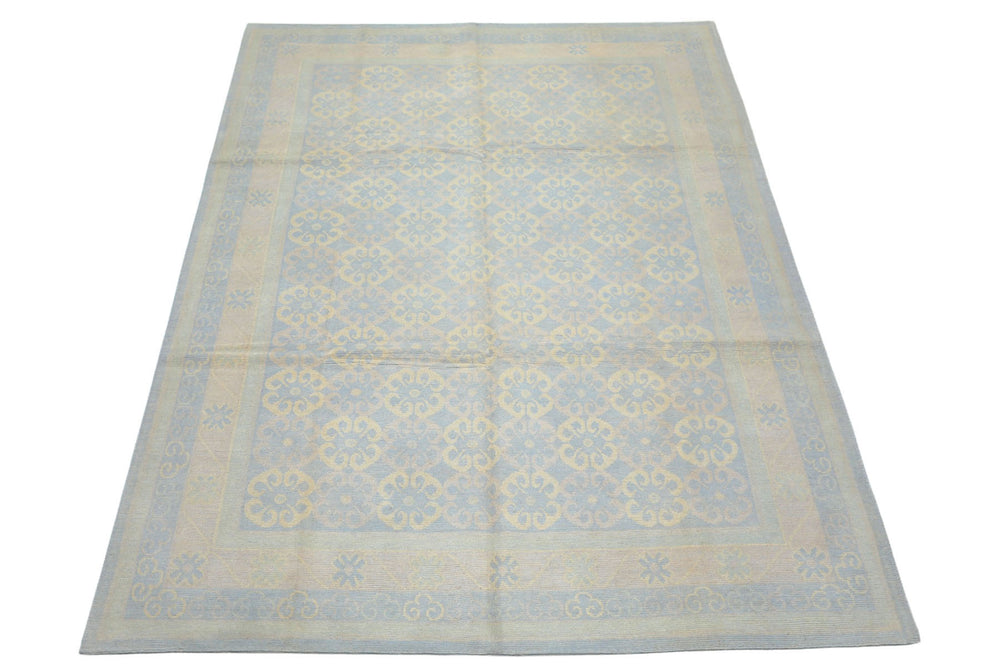
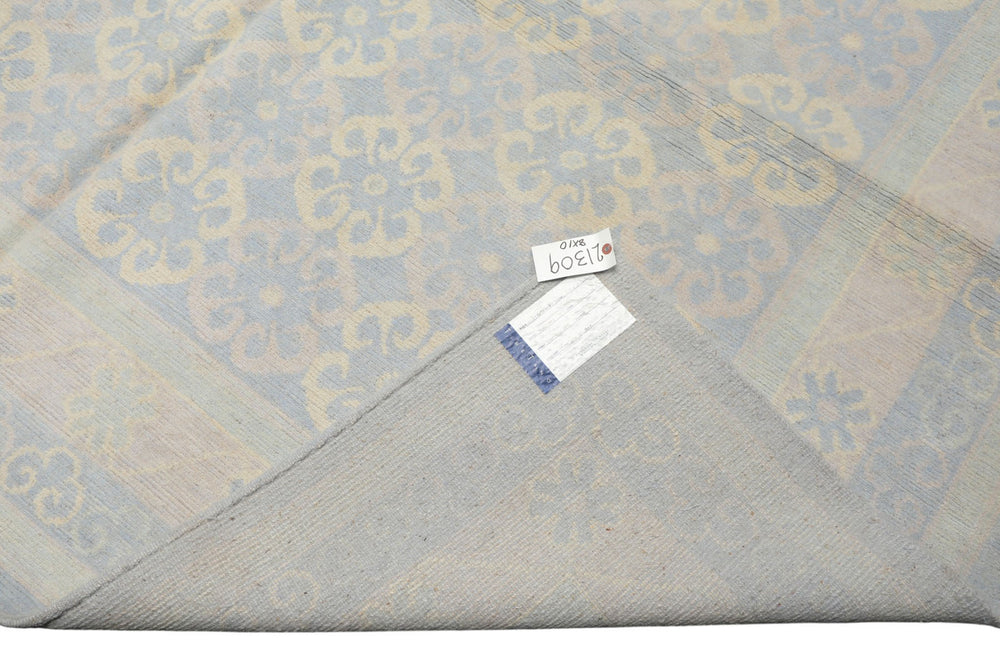
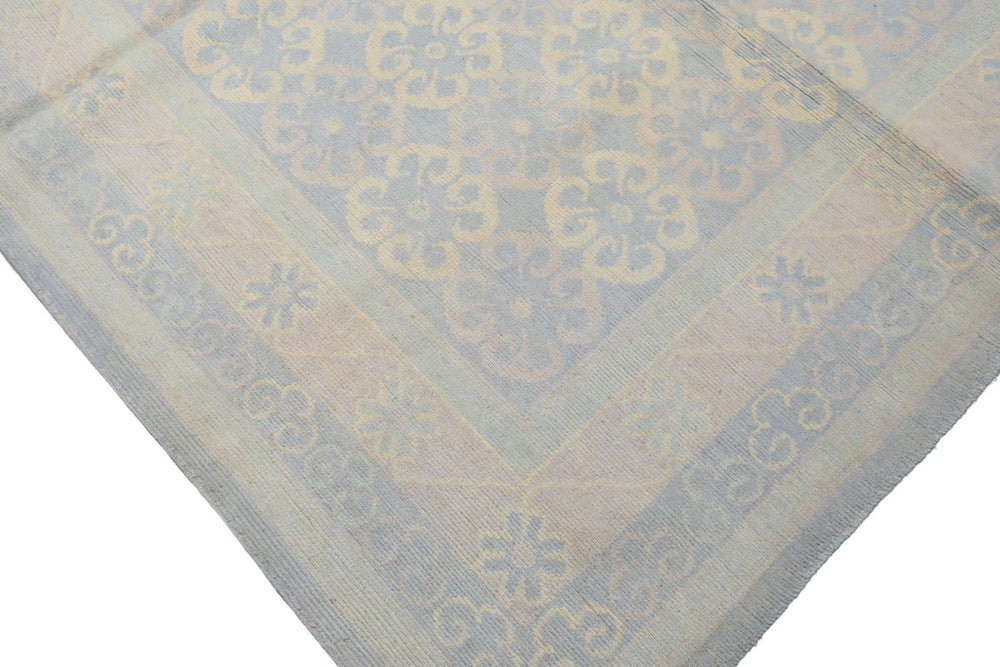
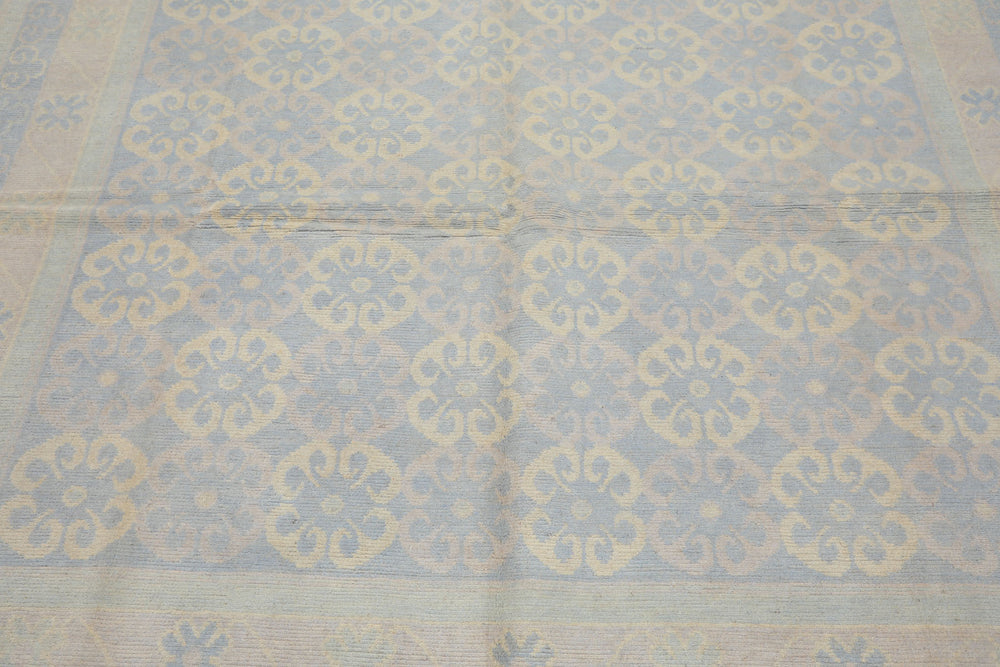
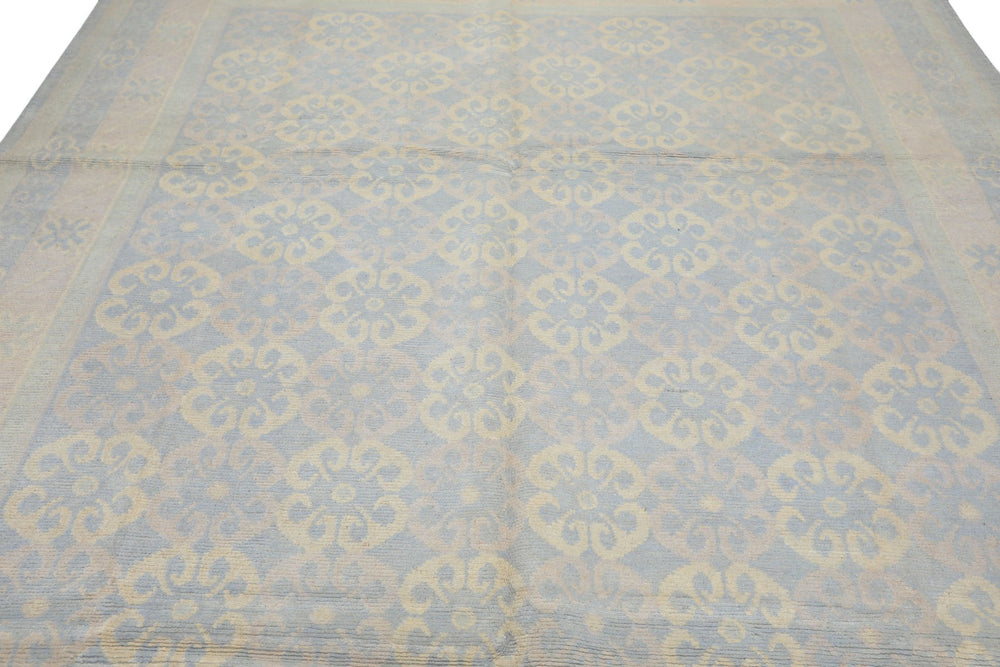
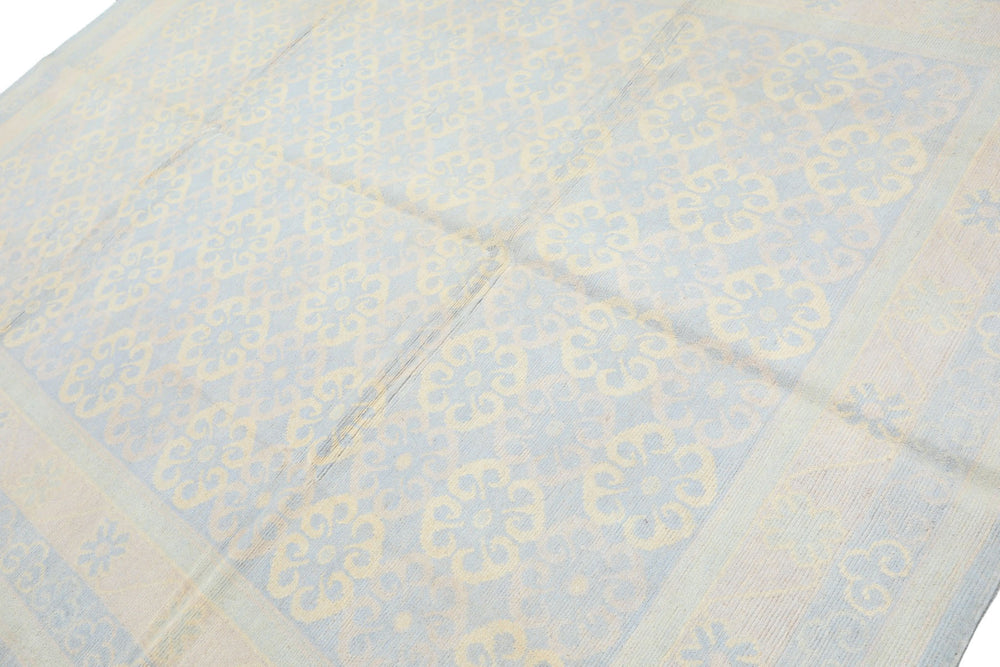
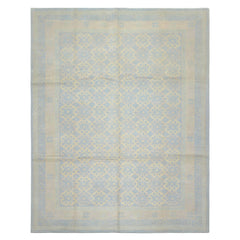
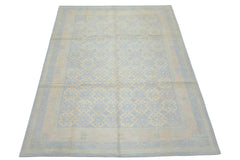
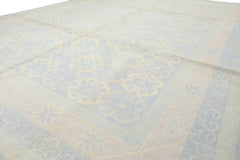
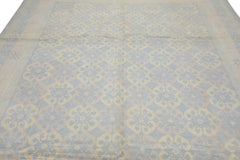
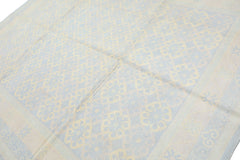
Knotted Rug 8x10 Blue Ivory Hand Knotted Wool Premium Tibetan Transitional Tibetano Designer Area Rug
- $1,499.99
$4,499.97- $1,499.99
- Unit price
- per
Please hurry! Only 1 left in stock
Subtotal:
$1,499.99
Couldn't load pickup availability


Description
xProduct Details
Product Identification
SKU #: KR21309
Style
Transitional
Weave
Hand Knotted
Colors
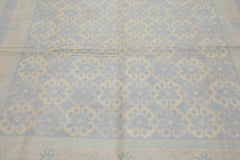
Primary color is Blue. Colors in this rug include: Ivory, Seafoam, Gray with slight purple undertone .
Material
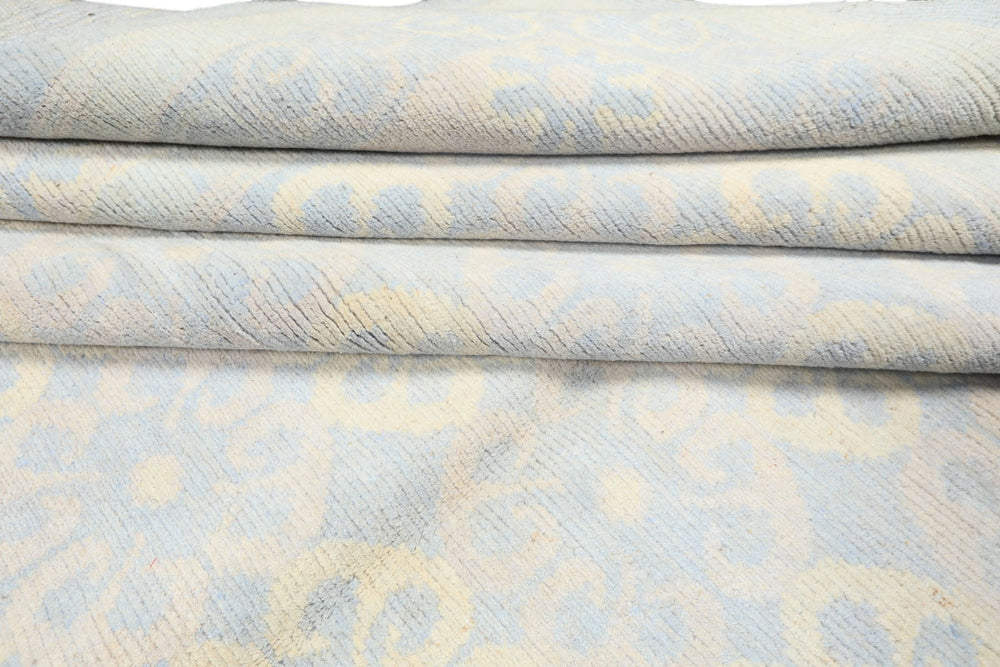
Wool
Pile Height
0.3
Collection
Tibetan
Origin
Nepal
Condition
New
Condition Description
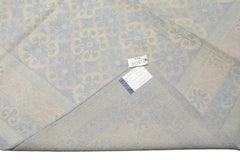
New With Tags
Product Description
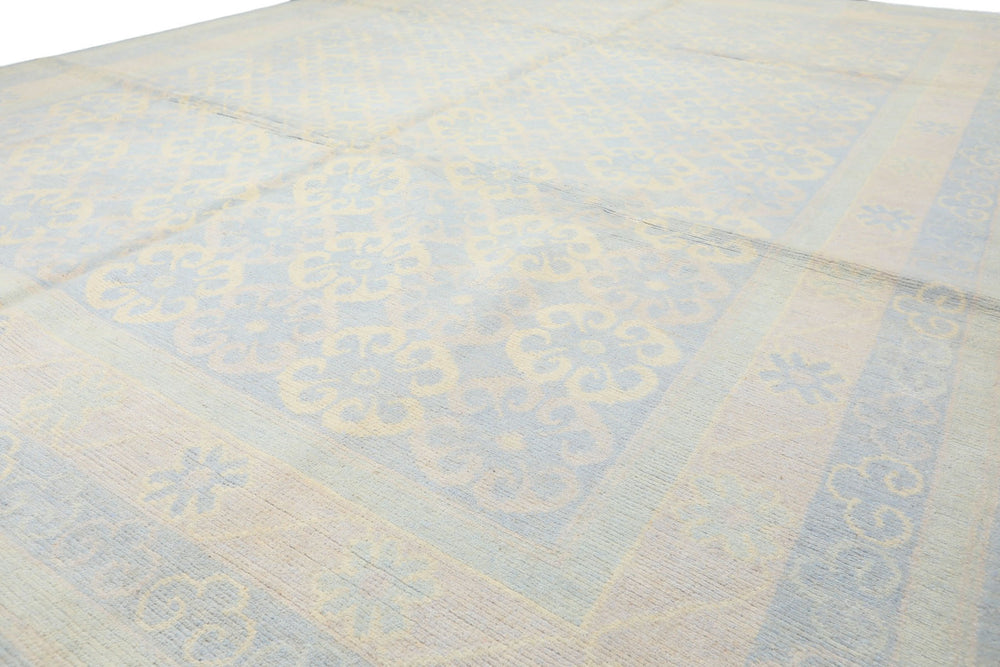
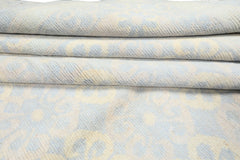
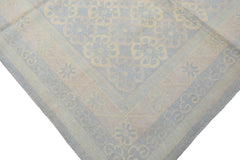
Made to add warmth and texture to the home, expertly hand knotted in wool, this Tibetan area rug covers a gentle powder blue field with rows of ivory floret medallions, each one built from small curling scrolls that fan out like a stylized flower. The motif repeats edge to edge in a tight, even grid, lending the field a quilted rhythm. A wide border in the same blue and ivory palette frames the piece, its corners marked by small star bursts that echo the florets inside without duplicating them exactly. That kind of allover medallion repeat draws on older Central Asian and Chinese textile patterns, though the pastel blue and ivory colorway here is a distinctly contemporary reinterpretation. Wool takes the dye beautifully in these lighter tones, holding the ivory scrollwork crisp against the blue ground even as the color shifts subtly with the light. It's a soft, orderly pattern that reads as much from its rhythm and repetition as from the motif itself, the kind of design that rewards a slower look rather than an immediate read. As a Tibetan style handmade wool area rug, it brings durable construction, soft texture, timeless design, and an elegant interior accent to a living room, dining room, bedroom, sitting area, or home office while keeping the original color story and crafted character intact. Please note that, as with most product photography, colors may appear slightly brighter on a screen than they do in natural lighting, so the actual tones may feel a bit softer in person.
Product Story Description
Story Behind the Art: For centuries, Tibetan rugs have been valued for both everyday function and decorative presence, with artisans drawing inspiration from geometric patterns, auspicious symbols, mythical creatures, and the natural world to create meaningful designs full of color. The craft saw an important transformation after 1959, when Tibetan communities spread into Nepal and India and supported a revived commercial rug-weaving tradition. By the 1970s, Tibetan rugs had gained strong recognition, and Nepalese artisans trained with Tibetan refugees became key to sustaining the heritage while also helping it evolve. Their distinctive slit-loop construction, called the Tibetan knot, produces a pile with notable depth, softness, and tactile appeal. Today, Tibetan, Nepalese, and Indo-Tibetan rugs range from renewed traditional designs, including branching florals and snow lions, to modern free-form compositions that bridge cultural history with contemporary décor.
Related Products
Example product title
- $1,499.99
$4,499.97- $1,499.99
- Unit price
- per
Example product title
- $1,499.99
$4,499.97- $1,499.99
- Unit price
- per
Example product title
- $1,499.99
$4,499.97- $1,499.99
- Unit price
- per
Example product title
- $1,499.99
$4,499.97- $1,499.99
- Unit price
- per
Example product title
- $1,499.99
$4,499.97- $1,499.99
- Unit price
- per
Example product title
- $1,499.99
$4,499.97- $1,499.99
- Unit price
- per
Example product title
- $1,499.99
$4,499.97- $1,499.99
- Unit price
- per
Example product title
- $1,499.99
$4,499.97- $1,499.99
- Unit price
- per
Example product title
- $1,499.99
$4,499.97- $1,499.99
- Unit price
- per
Example product title
- $1,499.99
$4,499.97- $1,499.99
- Unit price
- per
Recently Viewed Products
Example product title
- $1,499.99
$4,499.97- $1,499.99
- Unit price
- per
Example product title
- $1,499.99
$4,499.97- $1,499.99
- Unit price
- per
Example product title
- $1,499.99
$4,499.97- $1,499.99
- Unit price
- per
Example product title
- $1,499.99
$4,499.97- $1,499.99
- Unit price
- per
Example product title
- $1,499.99
$4,499.97- $1,499.99
- Unit price
- per
Example product title
- $1,499.99
$4,499.97- $1,499.99
- Unit price
- per
Example product title
- $1,499.99
$4,499.97- $1,499.99
- Unit price
- per
Example product title
- $1,499.99
$4,499.97- $1,499.99
- Unit price
- per
Example product title
- $1,499.99
$4,499.97- $1,499.99
- Unit price
- per
Example product title
- $1,499.99
$4,499.97- $1,499.99
- Unit price
- per
- Choosing a selection results in a full page refresh.