
Info@Knottedrug.com


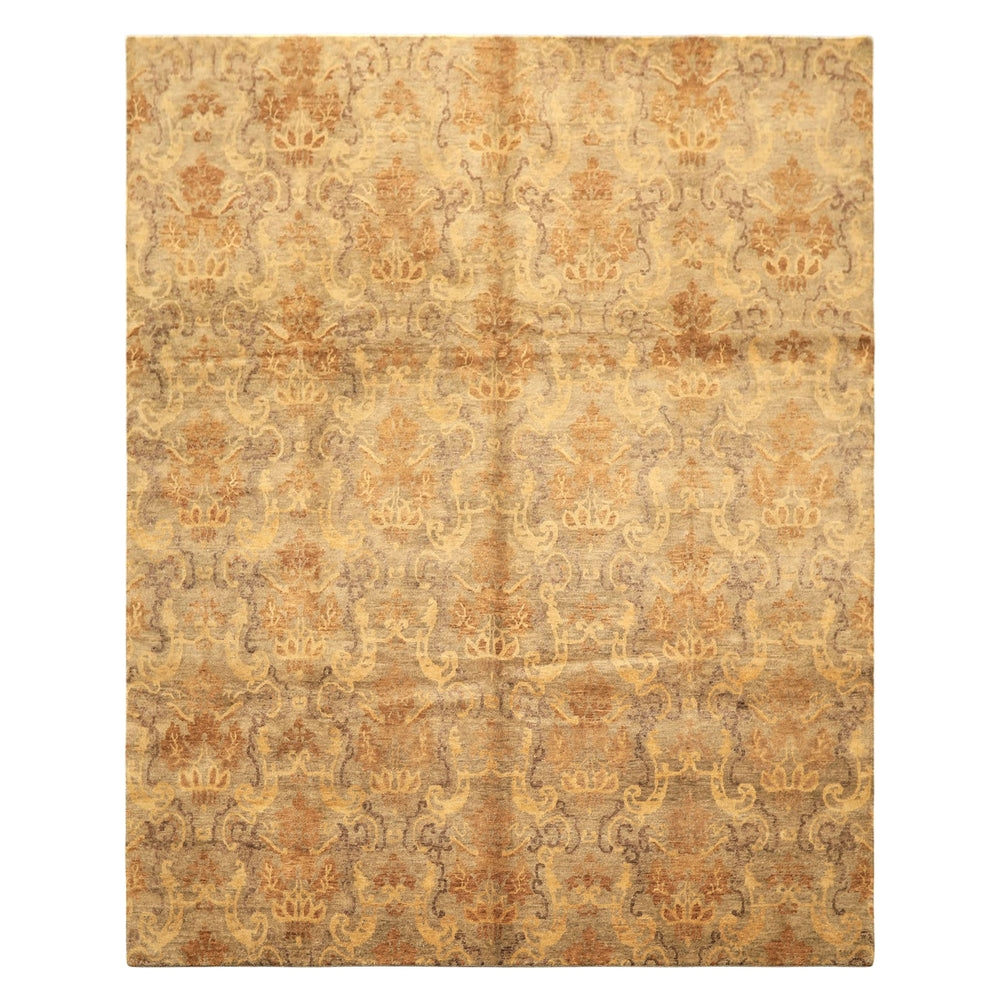
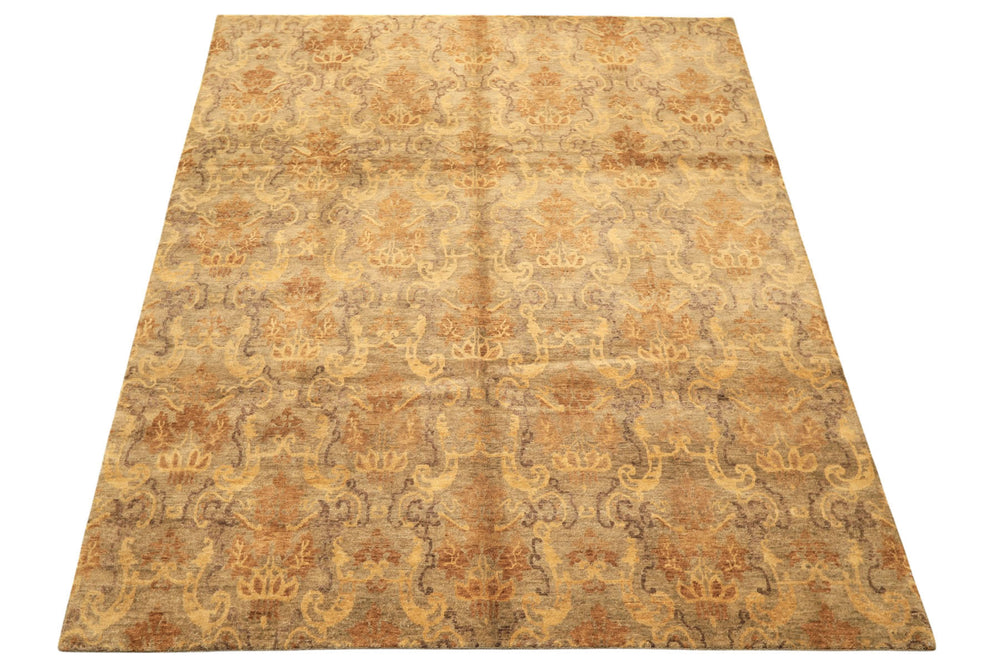
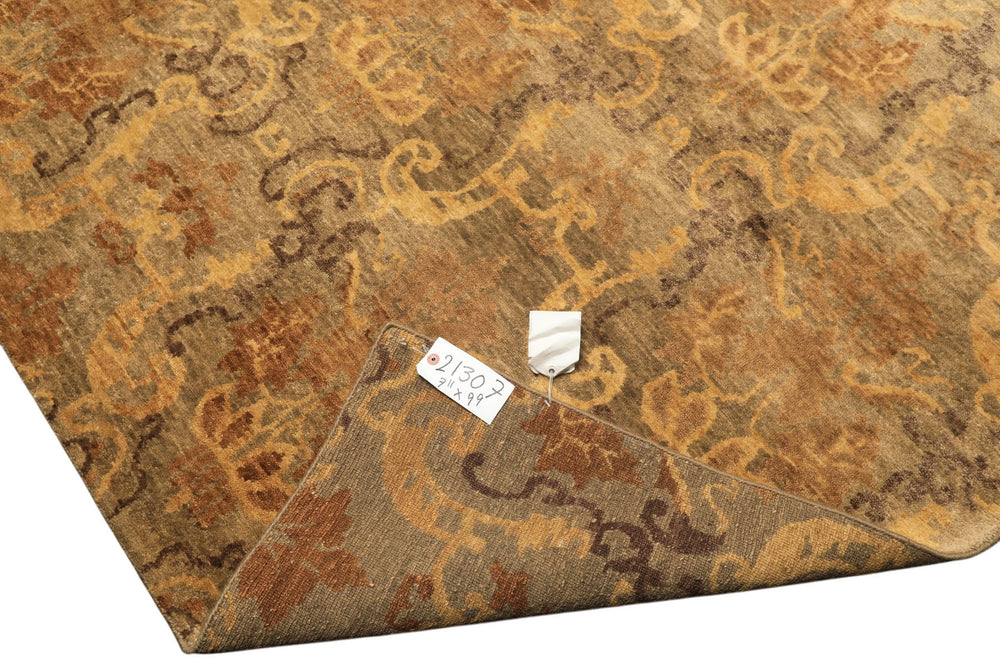
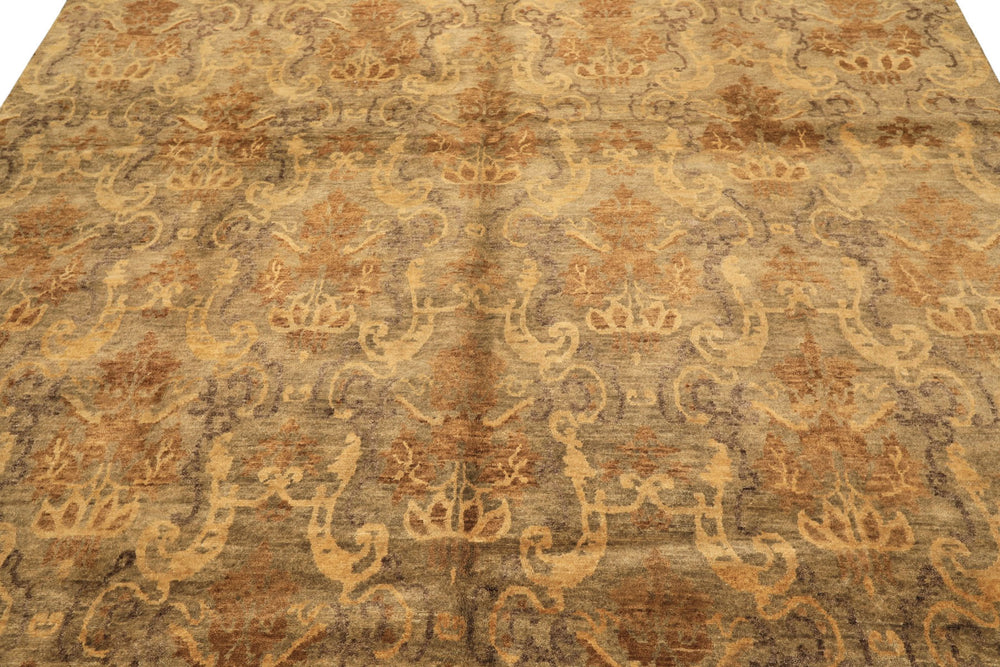
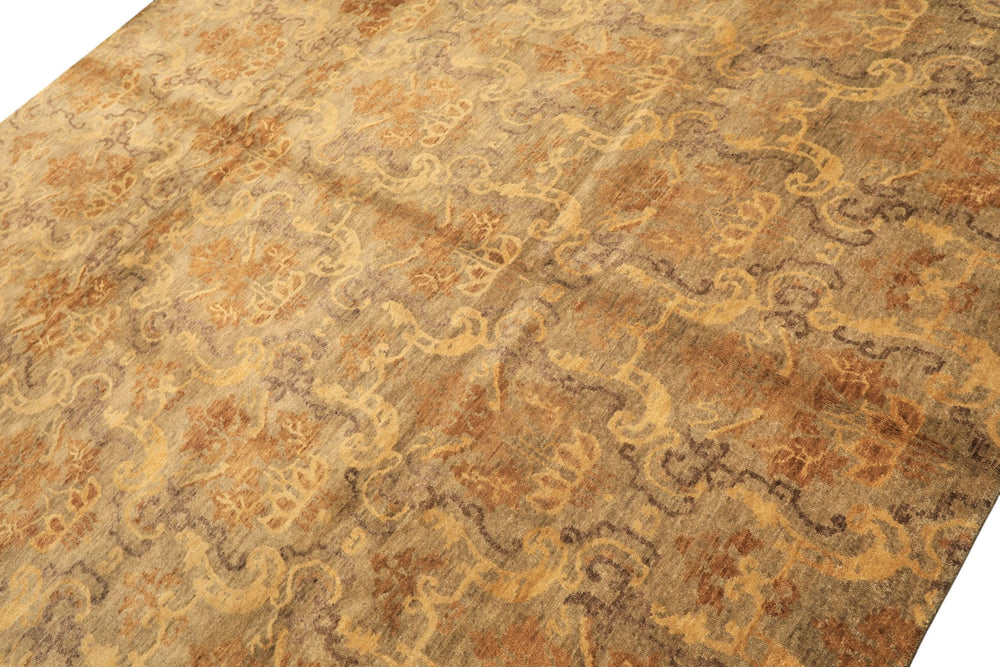
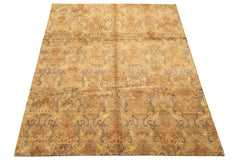
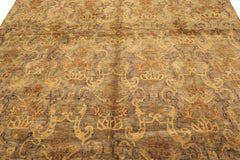
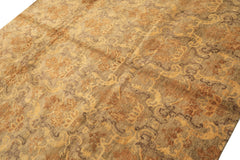
Knotted Rug 7'11''x9'9'' Brown Gold Hand Knotted Wool Indo Tibetan Transitional Area Rug
- $999.99
$2,999.97- $999.99
- Unit price
- per
Please hurry! Only 1 left in stock
Subtotal:
$999.99
Couldn't load pickup availability


Description
xProduct Details
Product Identification
SKU #: KR21307
Style
Transitional
Weave
Hand Knotted
Colors
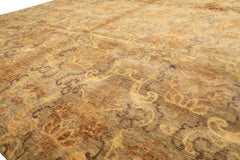
Primary color is Brown. Colors in this rug include: Gold, Tan, Gray, Multi .
Material
Wool
Pile Height
0.4
Collection
Indo Tibetan
Origin
India
Condition
New
Condition Description
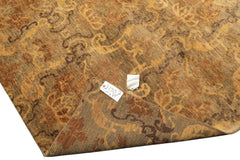
New With Tags
Product Description
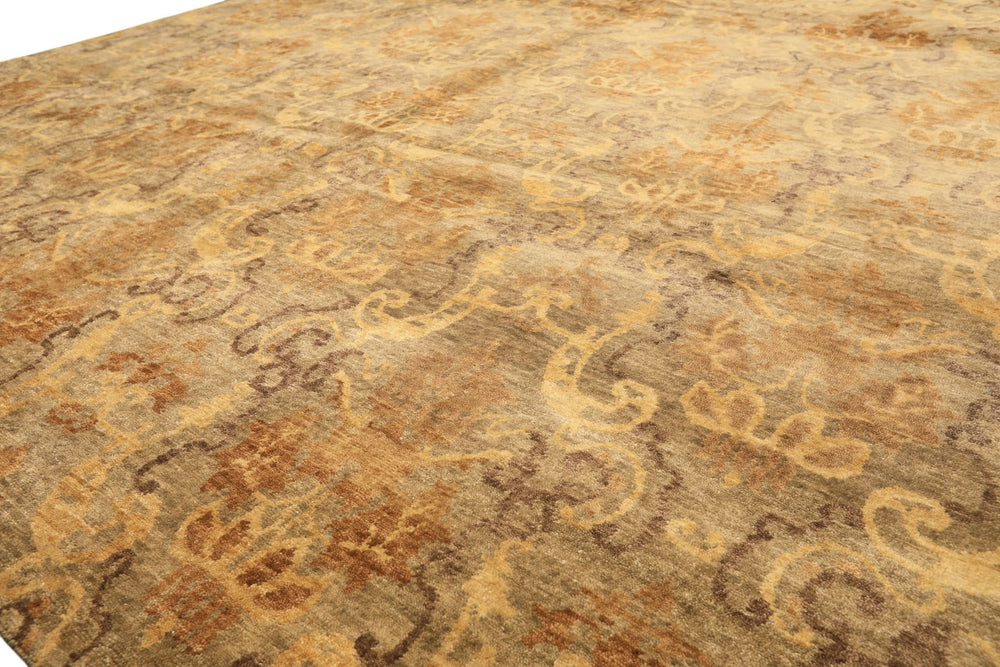
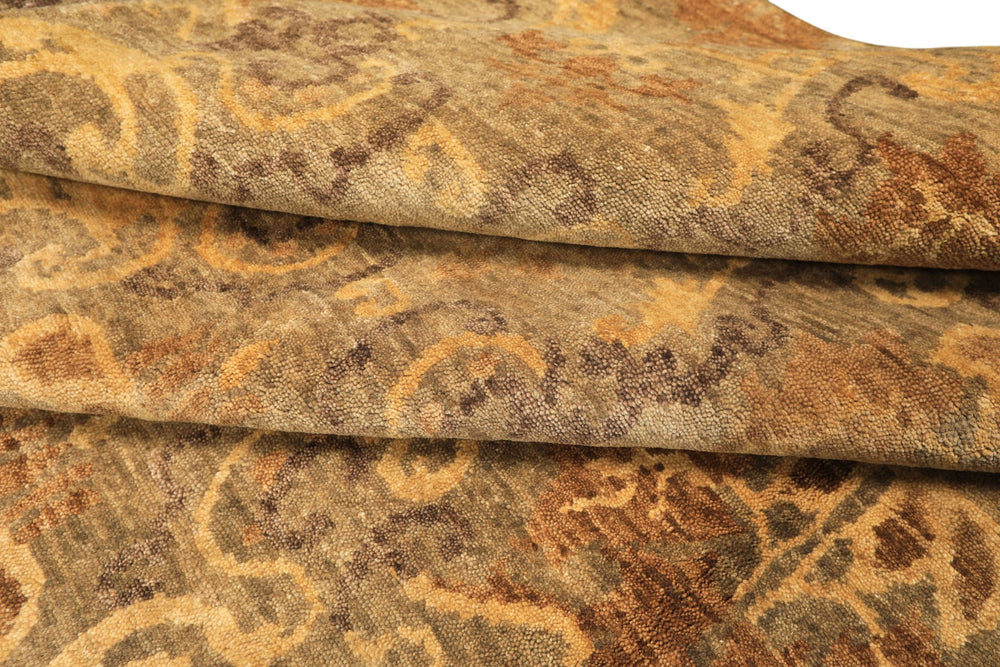
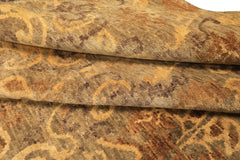
Designed for refined interiors, expertly hand knotted in wool, this Indo Tibetan area rug repeats a formal damask pattern across its field, gold scrollwork and small crowned florals set against a welcoming tan and gray ground that shifts tone gently from one section to the next. That kind of symmetrical, mirrored damask layout traces back to woven silk textiles long before it ever appeared on a rug, and Indo Tibetan workshops have carried the pattern over with a softer, more muted palette. Rust and gold tones carry the floral crowns at the center of each motif, while pale lilac gray threads through the scrolling vines connecting them, a small detail that adds depth without pulling focus from the main pattern. There's a worn-in, antique quality to the coloring here despite the rug being a contemporary weave, which is part of what defines the transitional category, pairing an old, formal pattern with a palette and finish that feels more relaxed and contemporary. Wool gives the piece the durability to handle regular use while still holding onto that gentle color story throughout. As a Tibetan style handmade wool area rug, it brings durable construction, soft texture, timeless design, and an elegant interior accent to a living room, dining room, bedroom, sitting area, or home office while keeping the original color story and crafted character intact. Please note that, as with most product photography, colors may appear slightly brighter on a screen than they do in natural lighting, so the actual tones may feel a bit softer in person.
Product Story Description
Story Behind the Art: For centuries, Tibetan artisans have woven rugs for both functional use and decorative expression, drawing from geometric motifs, auspicious symbols, mythical creatures, and natural imagery to create designs rich in color, symbolism, and cultural identity. The craft changed significantly after 1959 as Tibetan communities resettled across Nepal and India, encouraging a renewed commercial weaving movement. By the 1970s, Tibetan rugs had earned wide recognition, while Nepalese and Indian artisans working alongside Tibetan refugees in places such as Dharamshala and across northern India became important to preserving and evolving the tradition. This background explains the name Indo-Tibetan rugs: pieces that carry Tibetan weaving methods, knotting knowledge, and design vocabulary while being produced in India by resettled communities and locally trained weavers. With their meaningful motifs and carefully developed texture, these handmade rugs connect heritage craftsmanship with modern decorative use. Today, Tibetan, Nepalese, and Indo-Tibetan rugs include reimagined traditional motifs such as branching florals and snow lions, along with modern free-form patterns for contemporary interiors.
Related Products
Example product title
- $999.99
$2,999.97- $999.99
- Unit price
- per
Example product title
- $999.99
$2,999.97- $999.99
- Unit price
- per
Example product title
- $999.99
$2,999.97- $999.99
- Unit price
- per
Example product title
- $999.99
$2,999.97- $999.99
- Unit price
- per
Example product title
- $999.99
$2,999.97- $999.99
- Unit price
- per
Example product title
- $999.99
$2,999.97- $999.99
- Unit price
- per
Example product title
- $999.99
$2,999.97- $999.99
- Unit price
- per
Example product title
- $999.99
$2,999.97- $999.99
- Unit price
- per
Example product title
- $999.99
$2,999.97- $999.99
- Unit price
- per
Example product title
- $999.99
$2,999.97- $999.99
- Unit price
- per
Recently Viewed Products
Example product title
- $999.99
$2,999.97- $999.99
- Unit price
- per
Example product title
- $999.99
$2,999.97- $999.99
- Unit price
- per
Example product title
- $999.99
$2,999.97- $999.99
- Unit price
- per
Example product title
- $999.99
$2,999.97- $999.99
- Unit price
- per
Example product title
- $999.99
$2,999.97- $999.99
- Unit price
- per
Example product title
- $999.99
$2,999.97- $999.99
- Unit price
- per
Example product title
- $999.99
$2,999.97- $999.99
- Unit price
- per
Example product title
- $999.99
$2,999.97- $999.99
- Unit price
- per
Example product title
- $999.99
$2,999.97- $999.99
- Unit price
- per
Example product title
- $999.99
$2,999.97- $999.99
- Unit price
- per
- Choosing a selection results in a full page refresh.