
Info@Knottedrug.com


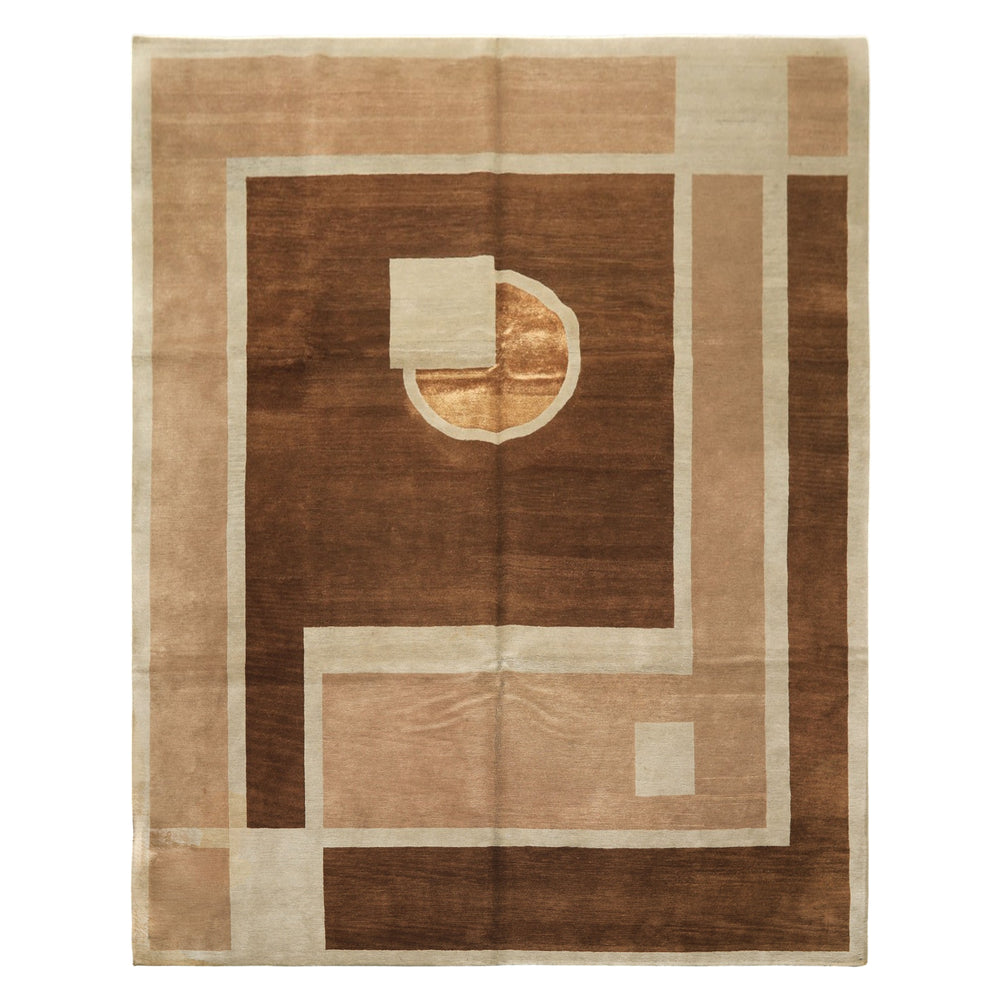
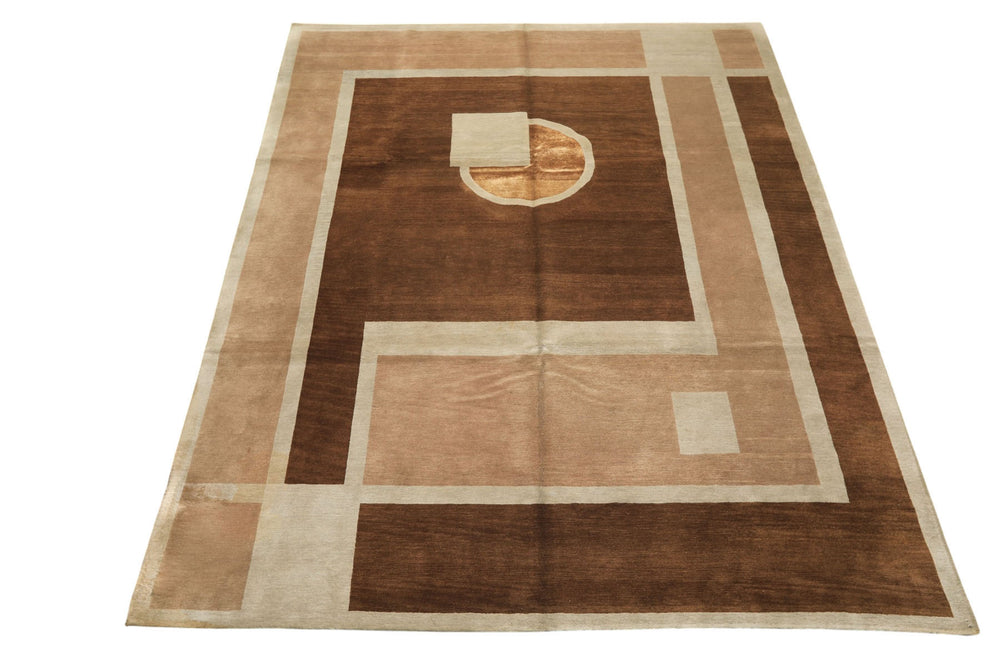
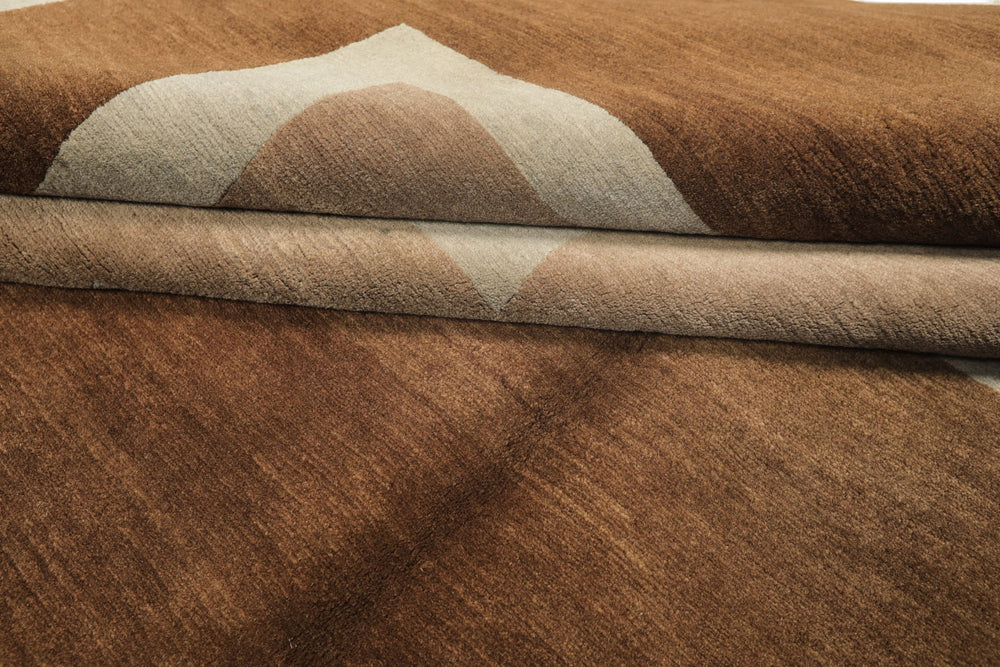
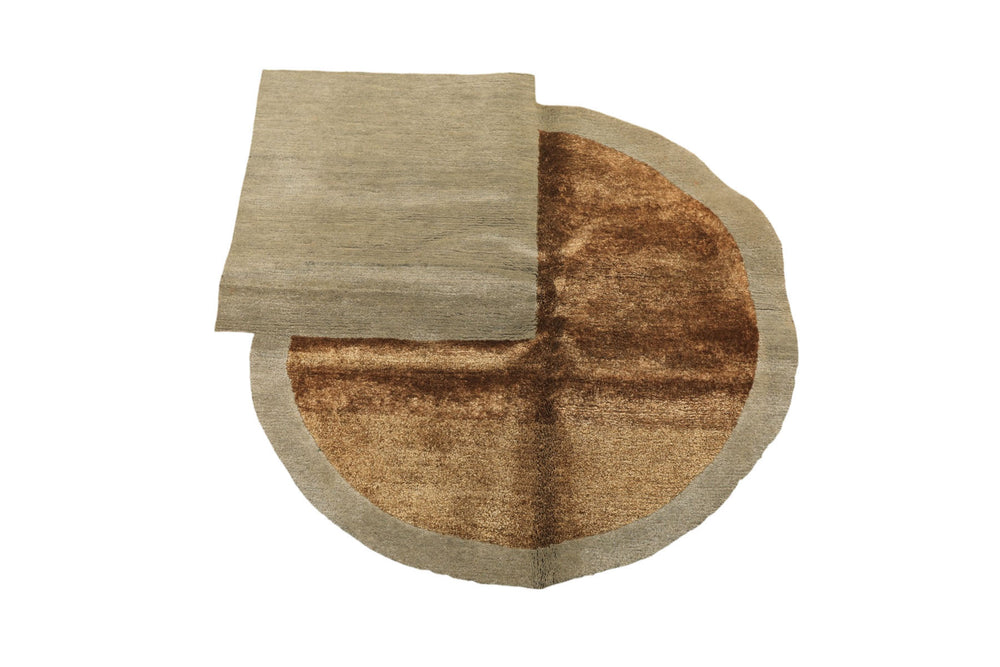
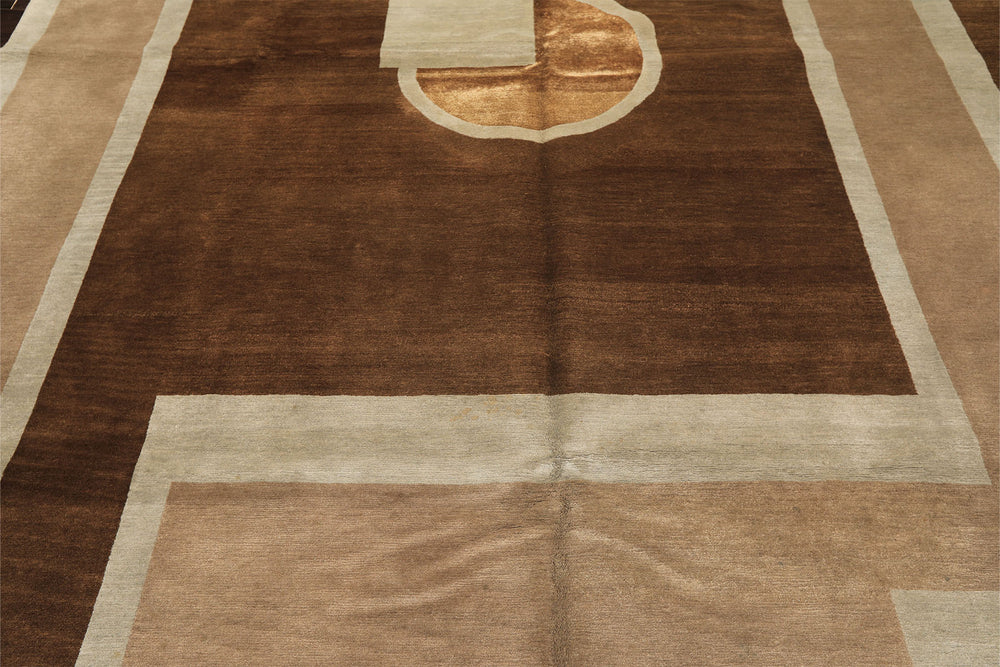
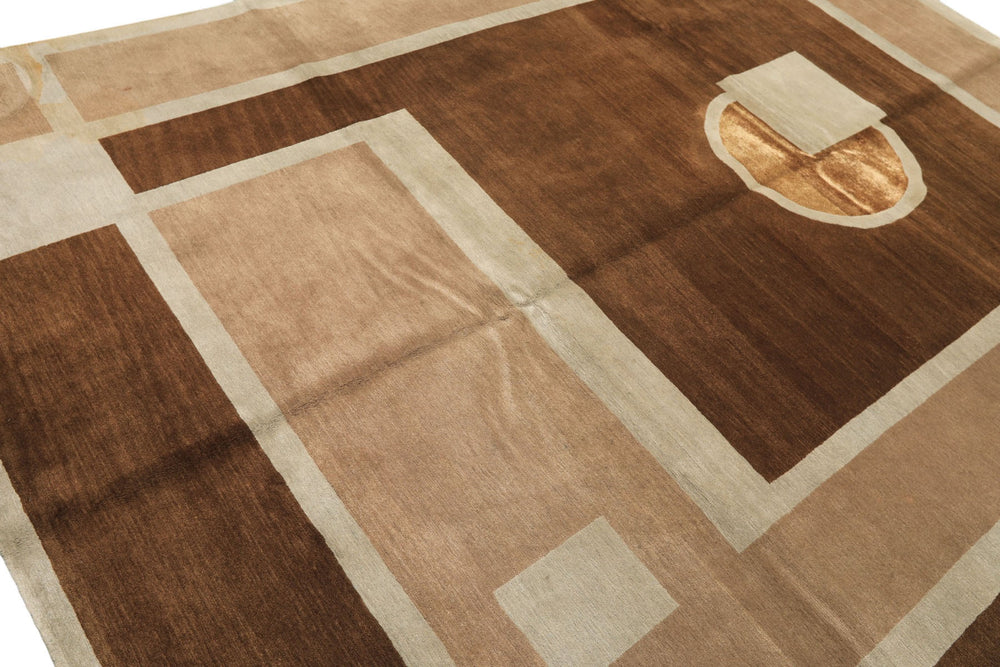
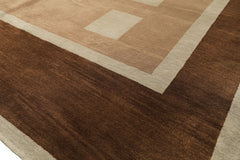
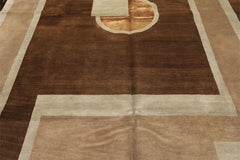
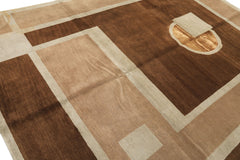
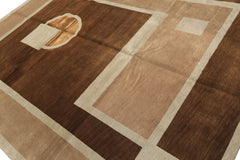
Knotted Rug 8x10 Brown Taupe Hand Knotted Wool and Pure Silk Premium Tibetan Art Deco Tibetano Designer Area Rug
- $1,999.99
$5,999.97- $1,999.99
- Unit price
- per
Please hurry! Only 1 left in stock
Subtotal:
$1,999.99
Couldn't load pickup availability


Description
xProduct Details
Product Identification
SKU #: KR21303
Design
Art Deco
Weave
Hand Knotted
Colors
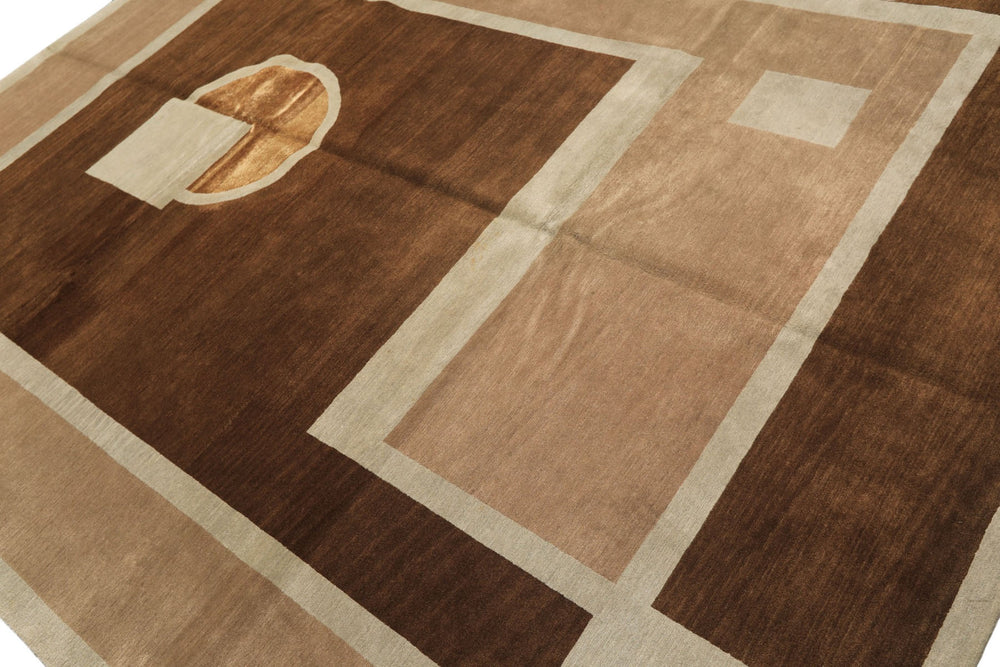
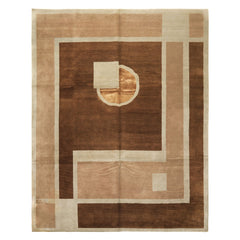
Primary color is Brown. Colors in this rug include: Taupe, Seafoam, Gold .
Material
Wool & Pure Silk
Pile Height
0.4
Collection
Tibetan
Origin
Nepal
Condition
New
Condition Description
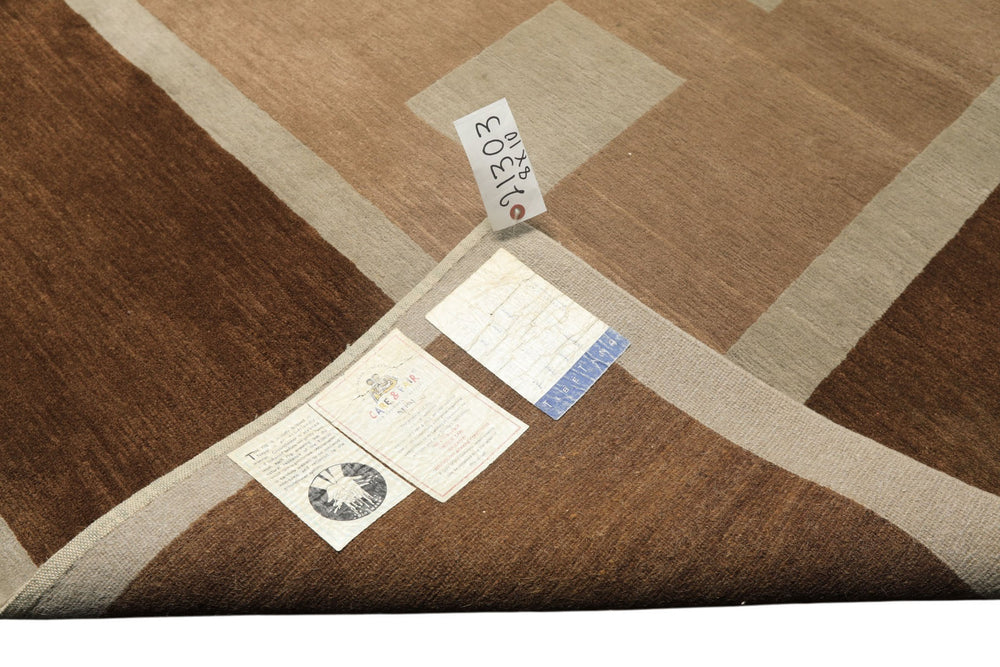
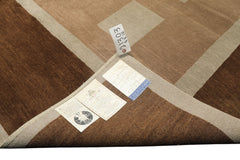
New With Tags
Product Description
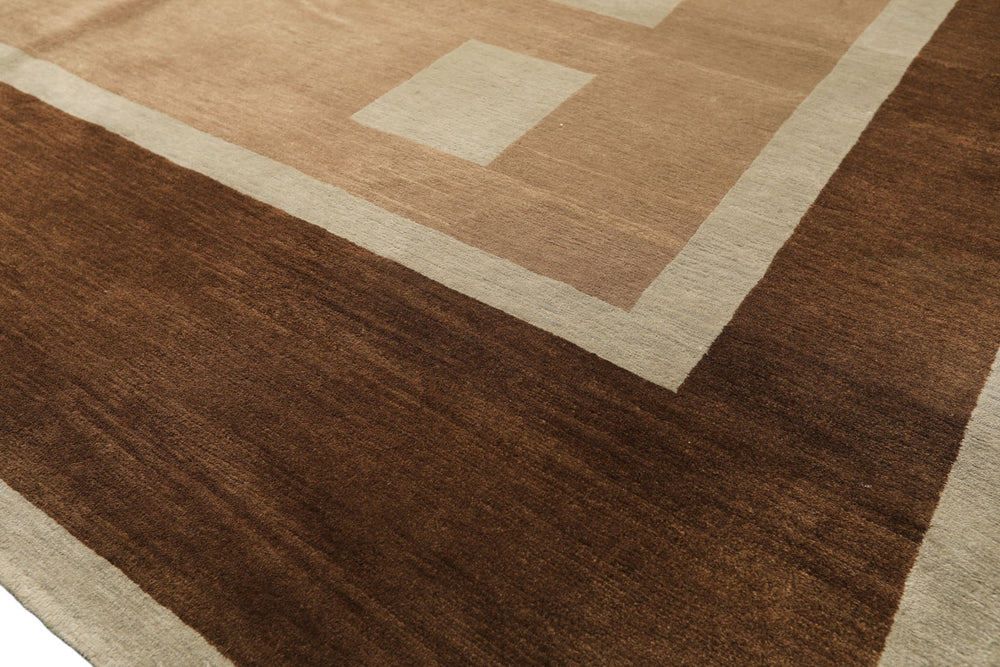
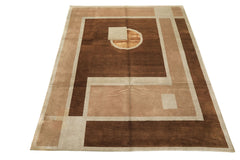
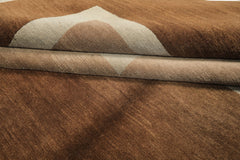
Created with lasting decorative appeal, expertly hand knotted from wool and pure silk, this Tibetan area rug builds its design out of stacked rectangles and a single offset circle, laid across a field of deep brown and welcoming taupe. That reliance on hard geometry and clean, overlapping blocks is straight out of the Art Deco playbook, a style that traded florals and scrollwork for bold shapes and confident lines, and it's a striking departure from the more classic patterns. The circle breaks from the rectangular grid entirely, a small but deliberate detail that pulls the eye toward the upper portion of the field. Ivory lines frame each block with real precision, separating brown from taupe with a crispness that helps keep the full composition feeling architectural. Wool gives the piece its substance and durability while silk adds just enough shine to the circle and border lines to keep the palette from feeling too flat. It's a rug built on geometry rather than pattern, which reflects the spirit of Art Deco design carried through into a completely different weaving tradition. As a Tibetan style handmade wool and silk area rug, it brings durable construction, soft texture, timeless design, and an elegant interior accent to a living room, dining room, bedroom, sitting area, or home office while keeping the original color story and crafted character intact. Please note that, as with most product photography, colors may appear slightly brighter on a screen than they do in natural lighting, so the actual tones may feel a bit softer in person.
Product Story Description
Story Behind the Art: For centuries, the Tibetan rug tradition has united everyday usefulness with artistic detail, taking inspiration from geometric motifs, auspicious emblems, mythical creatures, and natural imagery to create designs full of color and cultural meaning. After 1959, the spread of Tibetan communities into Nepal and India marked an important turning point, encouraging a commercial revival that helped keep the weaving heritage active. By the 1970s, Tibetan rugs had become internationally recognized, with Nepalese artisans trained alongside Tibetan refugees taking a central role in preserving and shaping the craft. Their unique slit-loop weaving process, known as the Tibetan knot, produces a pile with outstanding depth, softness, and tactile texture. Present-day Tibetan, Nepalese, and Indo-Tibetan handmade rugs move from refreshed traditional imagery, including branching florals and snow lions, to modern free-form patterns that connect heritage with contemporary interiors.
Related Products
Example product title
- $1,999.99
$5,999.97- $1,999.99
- Unit price
- per
Example product title
- $1,999.99
$5,999.97- $1,999.99
- Unit price
- per
Example product title
- $1,999.99
$5,999.97- $1,999.99
- Unit price
- per
Example product title
- $1,999.99
$5,999.97- $1,999.99
- Unit price
- per
Example product title
- $1,999.99
$5,999.97- $1,999.99
- Unit price
- per
Example product title
- $1,999.99
$5,999.97- $1,999.99
- Unit price
- per
Example product title
- $1,999.99
$5,999.97- $1,999.99
- Unit price
- per
Example product title
- $1,999.99
$5,999.97- $1,999.99
- Unit price
- per
Example product title
- $1,999.99
$5,999.97- $1,999.99
- Unit price
- per
Example product title
- $1,999.99
$5,999.97- $1,999.99
- Unit price
- per
Recently Viewed Products
Example product title
- $1,999.99
$5,999.97- $1,999.99
- Unit price
- per
Example product title
- $1,999.99
$5,999.97- $1,999.99
- Unit price
- per
Example product title
- $1,999.99
$5,999.97- $1,999.99
- Unit price
- per
Example product title
- $1,999.99
$5,999.97- $1,999.99
- Unit price
- per
Example product title
- $1,999.99
$5,999.97- $1,999.99
- Unit price
- per
Example product title
- $1,999.99
$5,999.97- $1,999.99
- Unit price
- per
Example product title
- $1,999.99
$5,999.97- $1,999.99
- Unit price
- per
Example product title
- $1,999.99
$5,999.97- $1,999.99
- Unit price
- per
Example product title
- $1,999.99
$5,999.97- $1,999.99
- Unit price
- per
Example product title
- $1,999.99
$5,999.97- $1,999.99
- Unit price
- per
- Choosing a selection results in a full page refresh.