
Info@Knottedrug.com


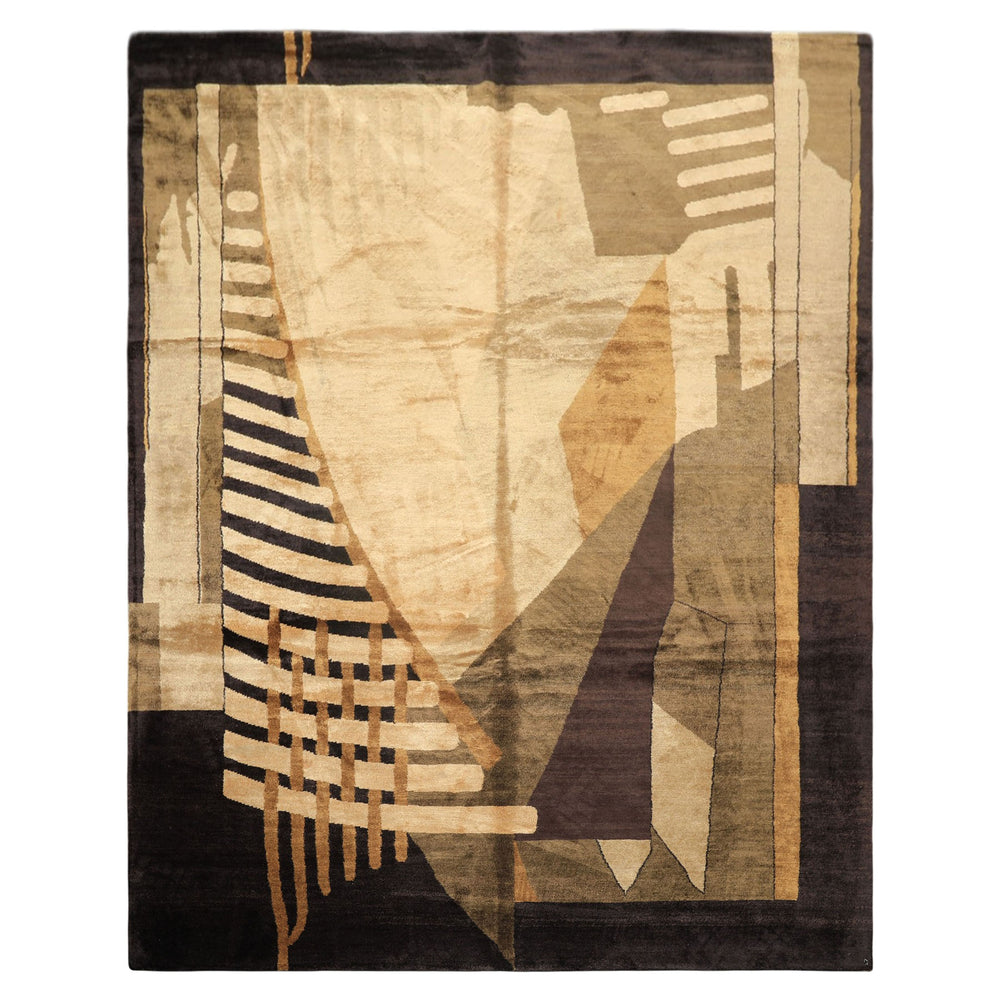
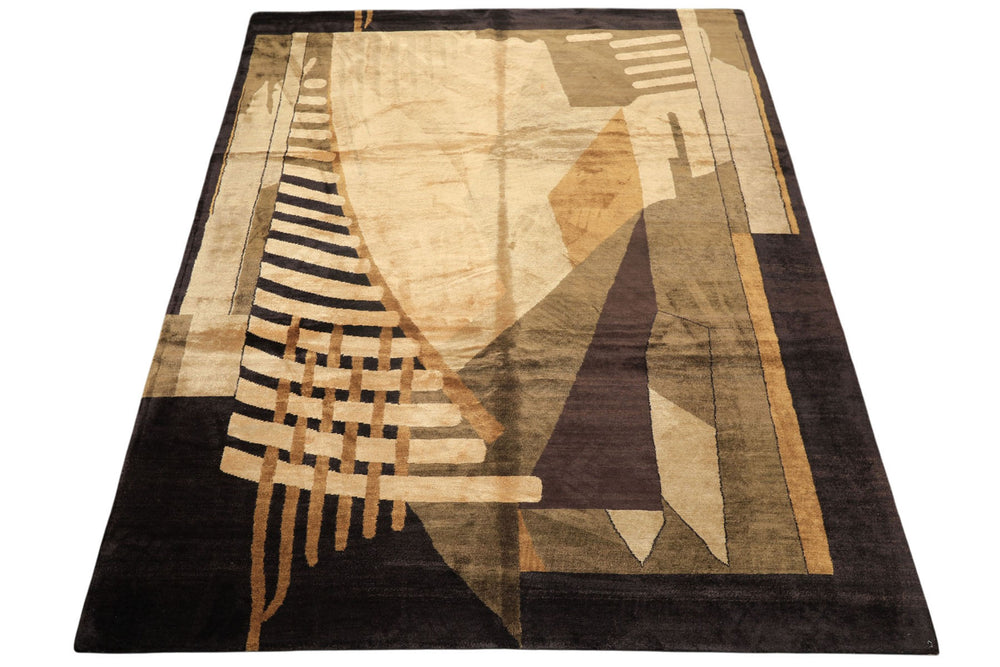
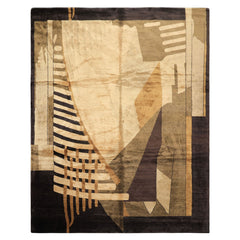
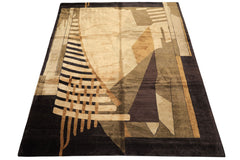
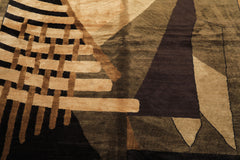
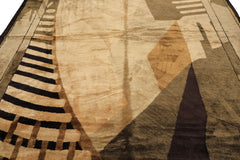
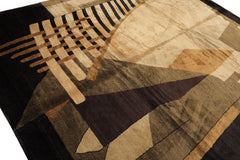
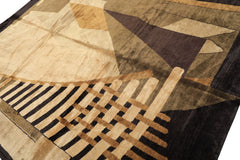
Knotted Rug 8x10 Charcoal Olive Hand Knotted Wool and Pure Silk Premium Tibetan Art Deco Tibetano Designer Area Rug
- $1,999.99
$5,999.97- $1,999.99
- Unit price
- per
Please hurry! Only 1 left in stock
Subtotal:
$1,999.99
Couldn't load pickup availability


Description
xProduct Details
Product Identification
SKU #: KR21311
Design
Art Deco
Weave
Hand Knotted
Colors
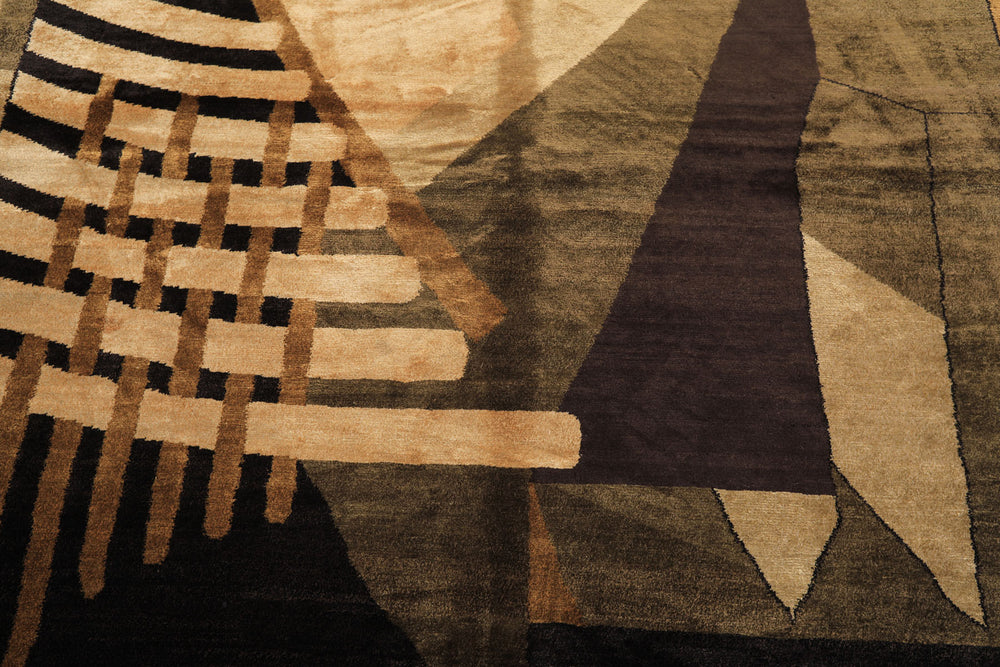
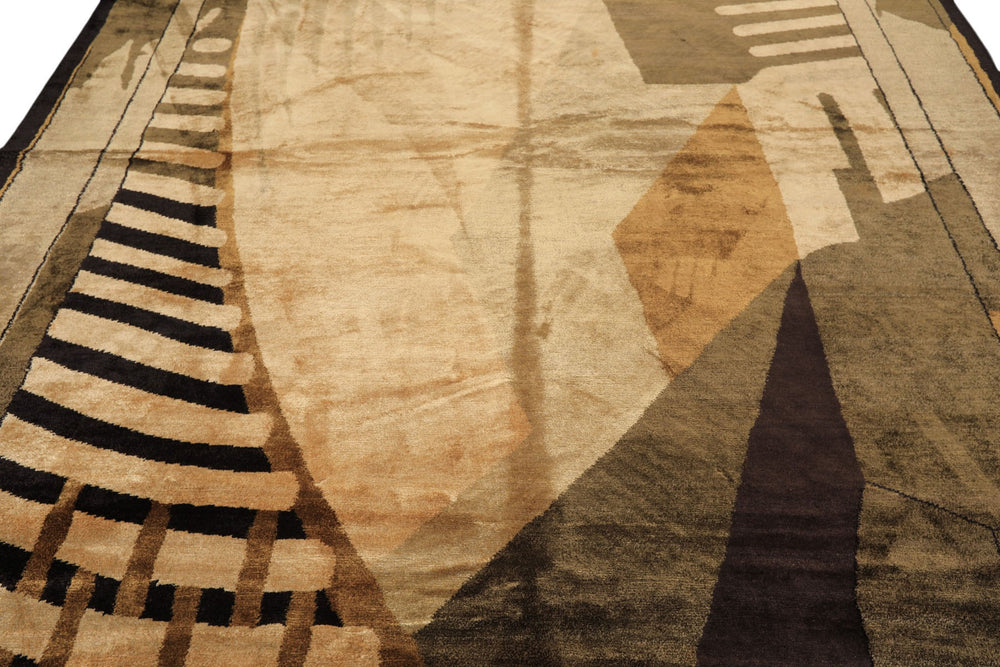
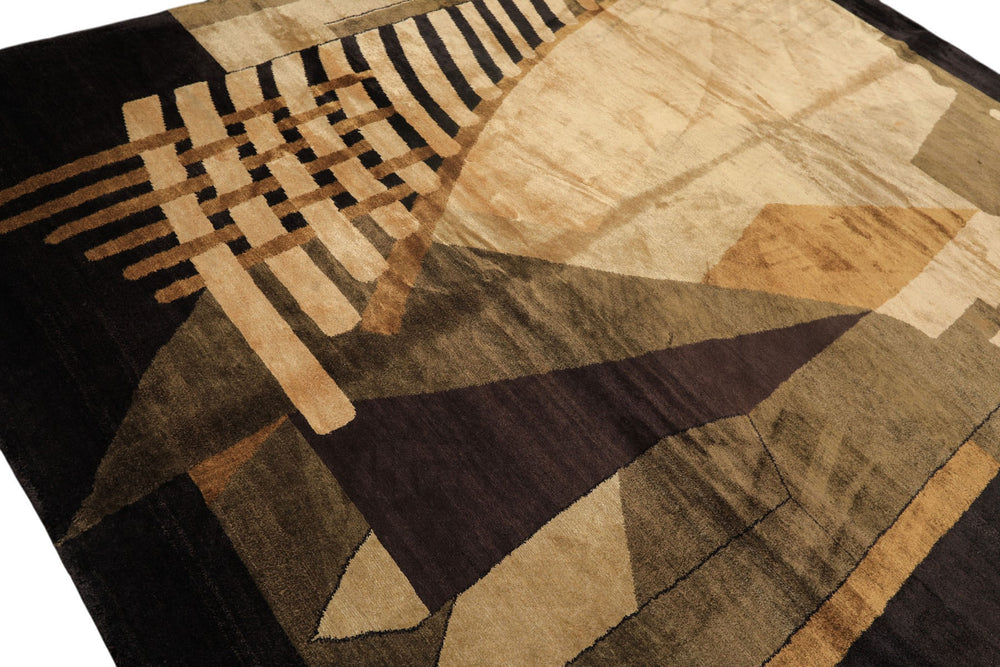
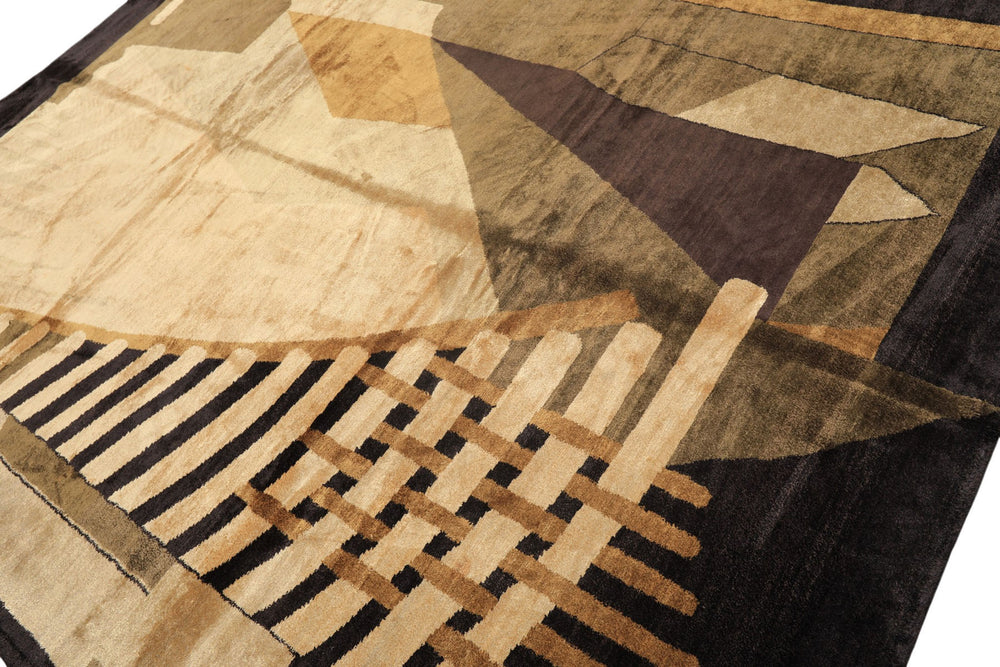
Primary color is Charcoal. Colors in this rug include: Olive, Green, Beige, Gold, Aubergine, Multi .
Material
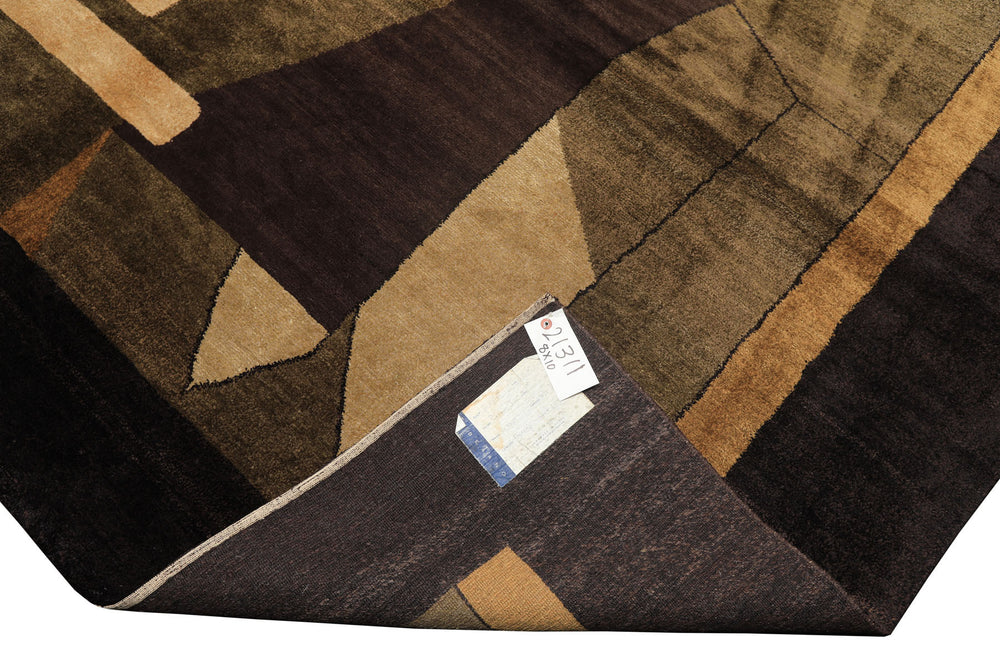
Wool & Pure Silk
Pile Height
0.5
Collection
Tibetan
Origin
Nepal
Condition
New
Condition Description
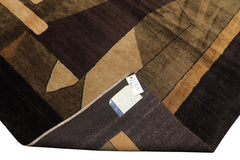
New With Tags
Product Description
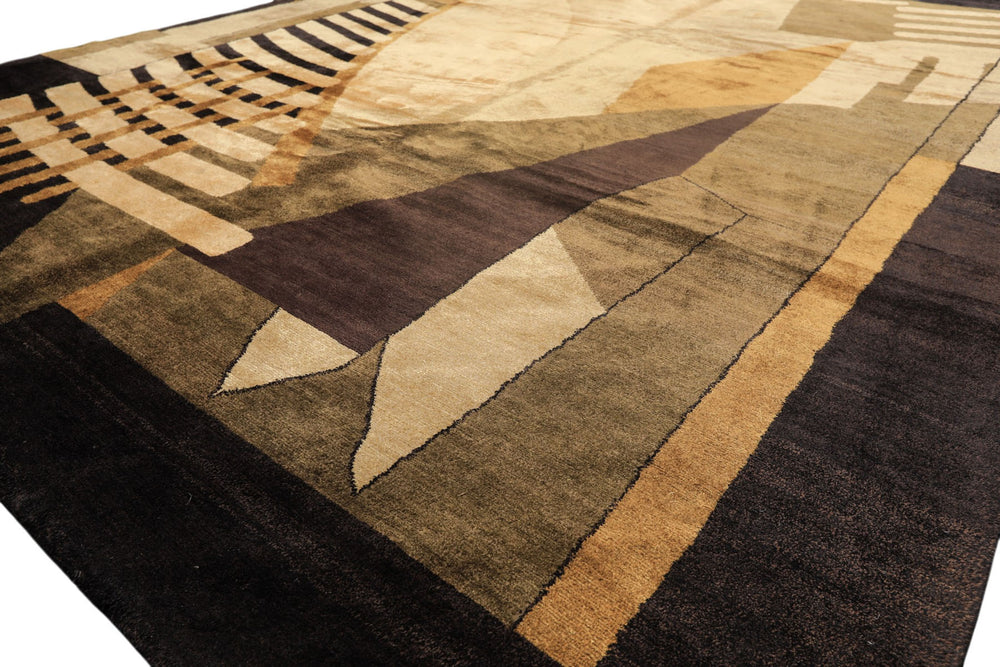
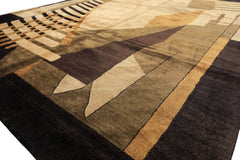
With a focus on texture, pattern, and lasting character, expertly hand knotted from wool and pure silk, this Tibetan area rug divides its field into large angled sections of charcoal, olive, and welcoming beige, cut through by a woven lattice of striped ribbon shapes that lock the full composition together like an interlocking puzzle. That kind of hard-edged sectioning, bold triangles and diagonal blocks meeting at sharp points, is straight out of Art Deco's playbook, a style that treated pattern more like architecture than decoration. Silk carries the sheen through the lighter cream and gold sections, catching light in a way that separates them from the flatter charcoal and aubergine blocks around them. The woven ribbon motif in the corner is the most graphic element on the rug, its interlacing bands rendered almost like a basket weave pattern lifted straight into two dimensions, a clever bit of visual trickery that Art Deco designers were fond of. Wool anchors the composition with real weight in the darker sections while silk does the work of making the lighter shapes glow against them. As a Tibetan style handmade wool and silk area rug, it brings durable construction, soft texture, timeless design, and an elegant interior accent to a living room, dining room, bedroom, sitting area, or home office while keeping the original color story and crafted character intact. Please note that, as with most product photography, colors may appear slightly brighter on a screen than they do in natural lighting, so the actual tones may feel a bit softer in person.
Product Story Description
Story Behind the Art: For many centuries, Tibetan rug weaving has blended practical purpose with decorative meaning, drawing from geometric forms, auspicious emblems, mythical animals, and natural imagery to create designs with strong color and symbolism. The craft entered a transformative period after 1959 as Tibetan communities moved into Nepal and India, inspiring a commercial revival that helped preserve the tradition while encouraging new interpretations. By the 1970s, Tibetan rugs had achieved notable recognition, and Nepalese artisans trained with Tibetan refugees became important partners in sustaining and evolving the craft. These rugs are distinguished by the slit-loop weaving technique called the Tibetan knot, which creates a pile with impressive softness, depth, and texture. Today, Tibetan, Nepalese, and Indo-Tibetan handmade rugs include reimagined traditional motifs, such as branching florals and snow lions, as well as modern free-form designs for transitional and contemporary interiors.
Related Products
Example product title
- $1,999.99
$5,999.97- $1,999.99
- Unit price
- per
Example product title
- $1,999.99
$5,999.97- $1,999.99
- Unit price
- per
Example product title
- $1,999.99
$5,999.97- $1,999.99
- Unit price
- per
Example product title
- $1,999.99
$5,999.97- $1,999.99
- Unit price
- per
Example product title
- $1,999.99
$5,999.97- $1,999.99
- Unit price
- per
Example product title
- $1,999.99
$5,999.97- $1,999.99
- Unit price
- per
Example product title
- $1,999.99
$5,999.97- $1,999.99
- Unit price
- per
Example product title
- $1,999.99
$5,999.97- $1,999.99
- Unit price
- per
Example product title
- $1,999.99
$5,999.97- $1,999.99
- Unit price
- per
Example product title
- $1,999.99
$5,999.97- $1,999.99
- Unit price
- per
Recently Viewed Products
Example product title
- $1,999.99
$5,999.97- $1,999.99
- Unit price
- per
Example product title
- $1,999.99
$5,999.97- $1,999.99
- Unit price
- per
Example product title
- $1,999.99
$5,999.97- $1,999.99
- Unit price
- per
Example product title
- $1,999.99
$5,999.97- $1,999.99
- Unit price
- per
Example product title
- $1,999.99
$5,999.97- $1,999.99
- Unit price
- per
Example product title
- $1,999.99
$5,999.97- $1,999.99
- Unit price
- per
Example product title
- $1,999.99
$5,999.97- $1,999.99
- Unit price
- per
Example product title
- $1,999.99
$5,999.97- $1,999.99
- Unit price
- per
Example product title
- $1,999.99
$5,999.97- $1,999.99
- Unit price
- per
Example product title
- $1,999.99
$5,999.97- $1,999.99
- Unit price
- per
- Choosing a selection results in a full page refresh.