
Info@Knottedrug.com


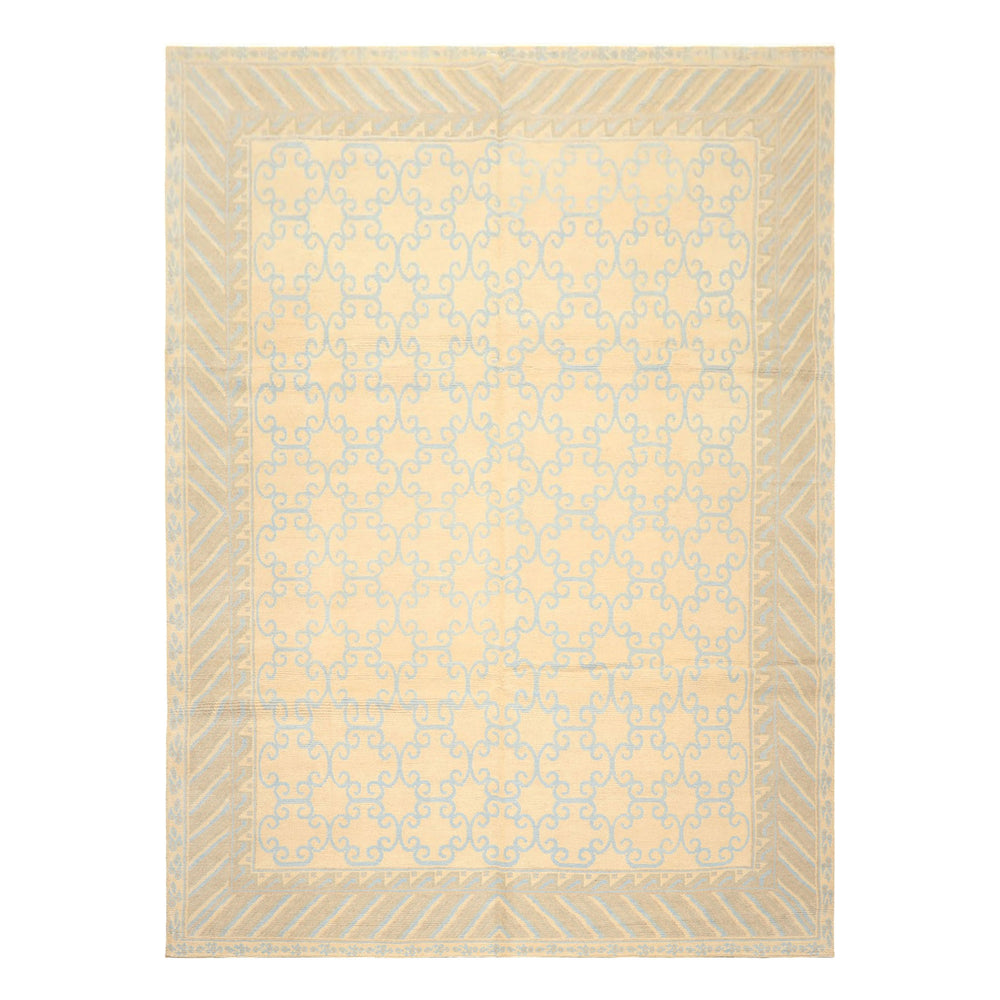
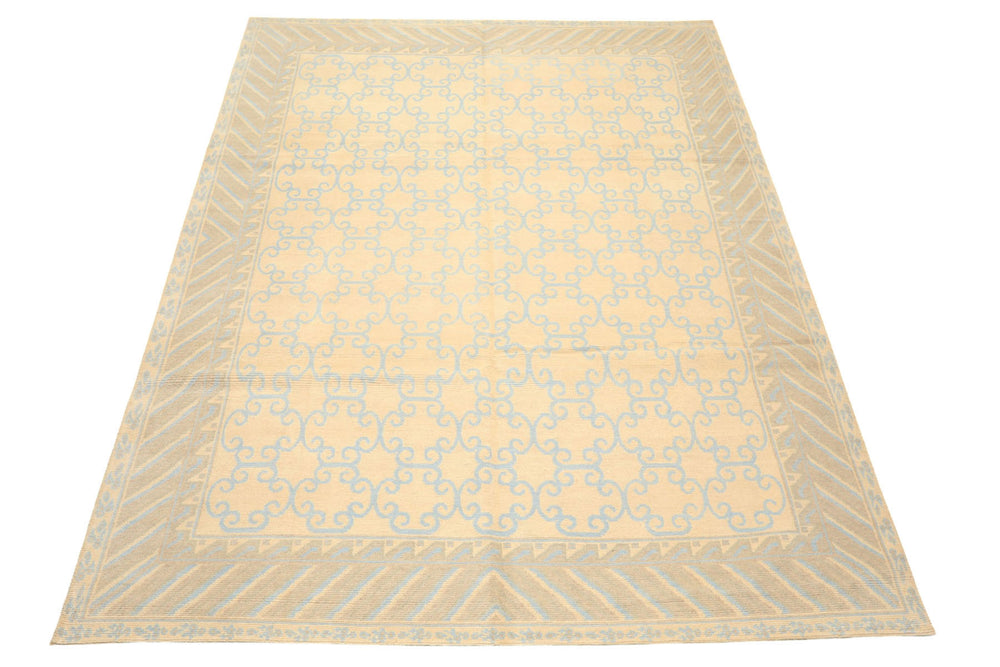
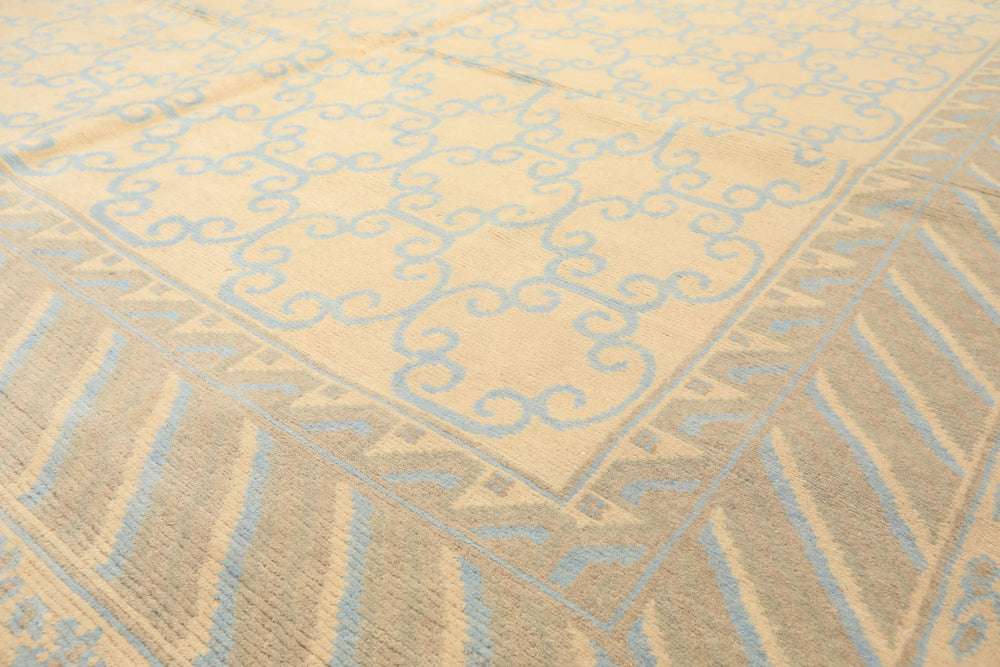
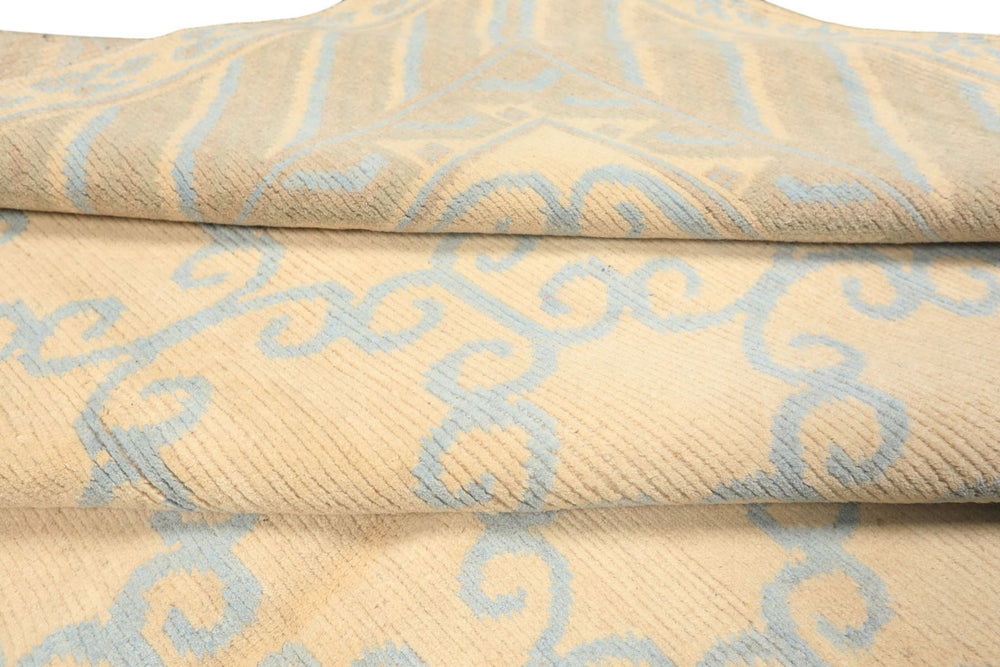
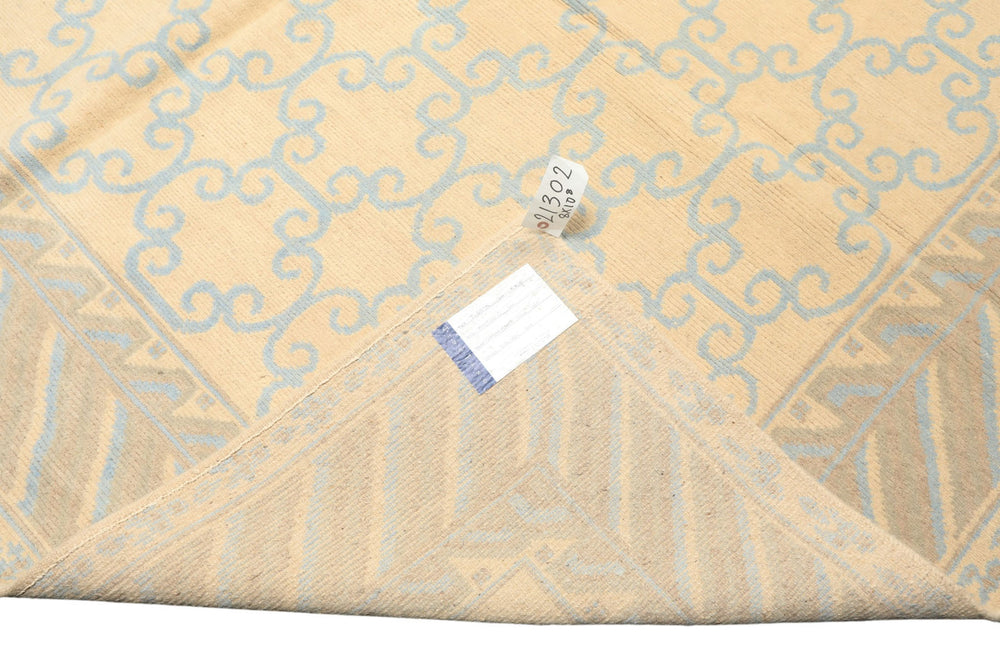
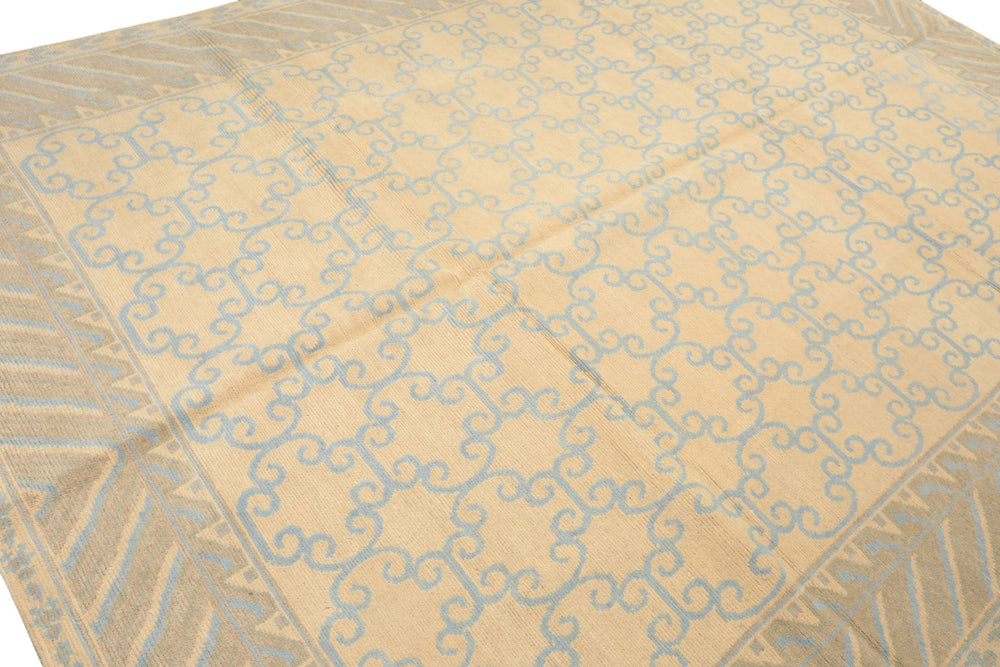
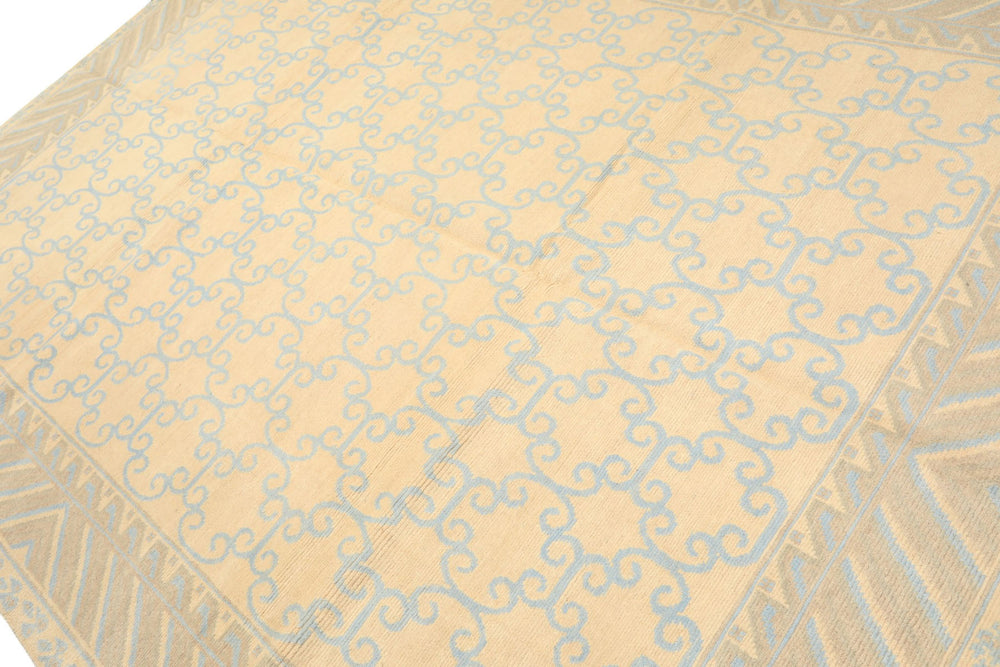
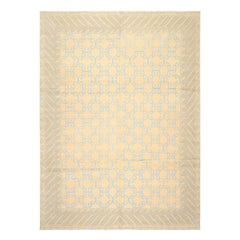
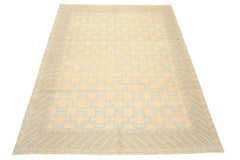
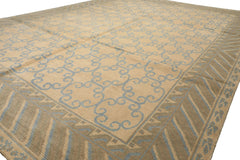
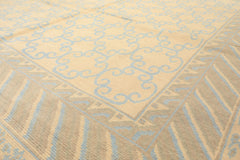
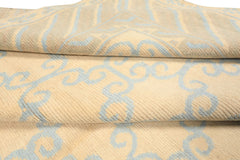
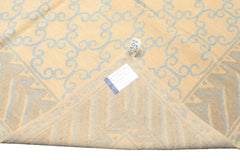
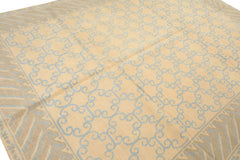
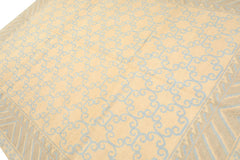
Knotted Rug 8x10'8'' Ivory Beige Hand Knotted Wool Premium Tibetan Transitional Tibetano Designer Area Rug
- $1,499.99
$4,499.97- $1,499.99
- Unit price
- per
Please hurry! Only 1 left in stock
Subtotal:
$1,499.99
Couldn't load pickup availability


Description
xProduct Details
Product Identification
SKU #: KR21302
Style
Transitional
Weave
Hand Knotted
Colors
Primary color is Ivory. Colors in this rug include: Beige, Taupe, Aqua .
Material
Wool
Pile Height
0.4
Collection
Tibetan
Origin
Nepal
Condition
New
Condition Description
New With Tags
Product Description
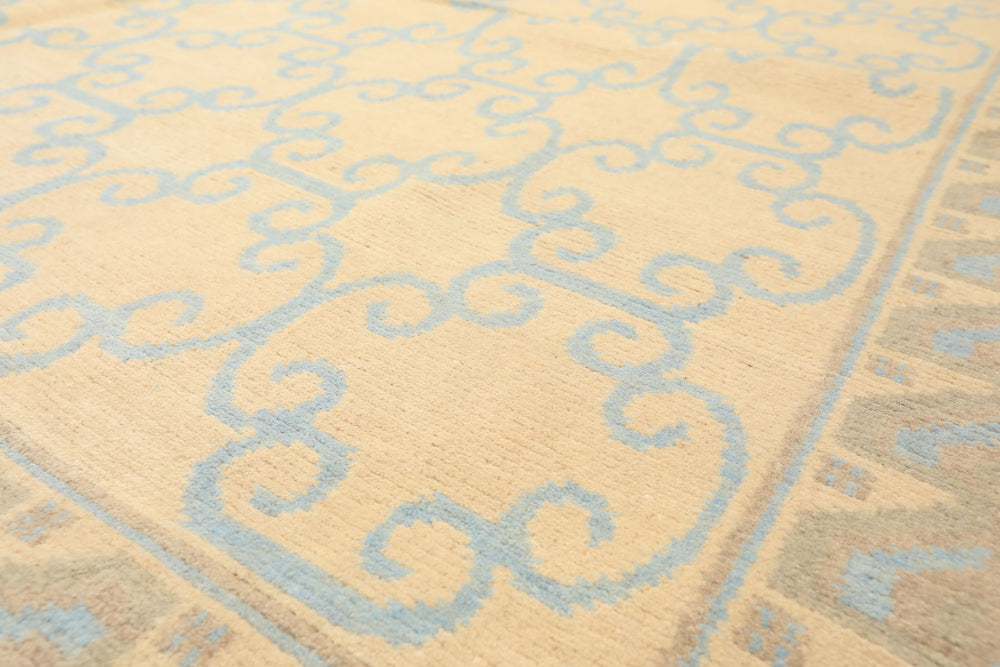
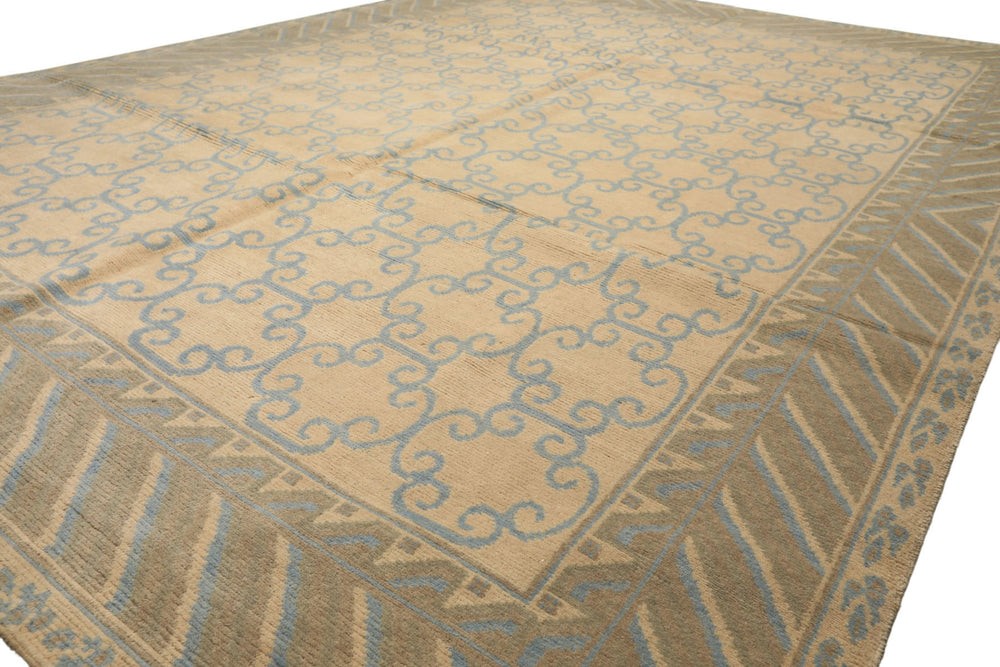
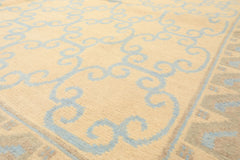
Designed for refined interiors, expertly hand knotted in wool, this Tibetan area rug lays out a light blue scroll pattern across an ivory field, the lines looping and connecting in a lattice. That kind of continuous scrollwork has roots in Central Asian and Chinese textile traditions Tibetan weavers have long drawn from, though here it's rendered with a gentle, contemporary palette that helps keep it feeling current. A wide taupe and ivory border of angled chevron stripes wraps the field, breaking from the scrollwork's curves with sharp diagonal lines. That contrast, soft looping pattern inside a crisp geometric frame, is a hallmark of transitional design, taking a classic motif and setting it against something more contemporary. The color story stays tight throughout, just ivory, beige, and a pale aqua blue, which allows the linework carry the design. As a Tibetan style handmade wool area rug, it brings durable construction, soft texture, timeless design, and an elegant interior accent to a living room, dining room, bedroom, sitting area, or home office while keeping the original color story and crafted character intact. Please note that, as with most product photography, colors may appear slightly brighter on a screen than they do in natural lighting, so the actual tones may feel a bit softer in person.
Product Story Description
Story Behind the Art: Across many generations, Tibetan artisans have woven rugs that balance function, comfort, and decorative symbolism, incorporating geometric patterning, auspicious symbols, mythical figures, and imagery from nature into designs of vivid meaning. A major transformation occurred after 1959 as Tibetan communities moved into Nepal and India, helping to revive rug weaving on a commercial scale while preserving traditional knowledge. By the 1970s, Tibetan rugs had gained significant recognition, and Nepalese artisans trained alongside Tibetan refugees played a key role in continuing and expanding the craft. The rugs are especially valued for the slit-loop method known as the Tibetan knot, which gives the pile unusual depth, softness, and textured dimension. Today, Tibetan, Nepalese, and Indo-Tibetan rugs include reworked traditional motifs like branching florals and snow lions as well as modern free-form designs for transitional and contemporary décor.
Related Products
Example product title
- $1,499.99
$4,499.97- $1,499.99
- Unit price
- per
Example product title
- $1,499.99
$4,499.97- $1,499.99
- Unit price
- per
Example product title
- $1,499.99
$4,499.97- $1,499.99
- Unit price
- per
Example product title
- $1,499.99
$4,499.97- $1,499.99
- Unit price
- per
Example product title
- $1,499.99
$4,499.97- $1,499.99
- Unit price
- per
Example product title
- $1,499.99
$4,499.97- $1,499.99
- Unit price
- per
Example product title
- $1,499.99
$4,499.97- $1,499.99
- Unit price
- per
Example product title
- $1,499.99
$4,499.97- $1,499.99
- Unit price
- per
Example product title
- $1,499.99
$4,499.97- $1,499.99
- Unit price
- per
Example product title
- $1,499.99
$4,499.97- $1,499.99
- Unit price
- per
Recently Viewed Products
Example product title
- $1,499.99
$4,499.97- $1,499.99
- Unit price
- per
Example product title
- $1,499.99
$4,499.97- $1,499.99
- Unit price
- per
Example product title
- $1,499.99
$4,499.97- $1,499.99
- Unit price
- per
Example product title
- $1,499.99
$4,499.97- $1,499.99
- Unit price
- per
Example product title
- $1,499.99
$4,499.97- $1,499.99
- Unit price
- per
Example product title
- $1,499.99
$4,499.97- $1,499.99
- Unit price
- per
Example product title
- $1,499.99
$4,499.97- $1,499.99
- Unit price
- per
Example product title
- $1,499.99
$4,499.97- $1,499.99
- Unit price
- per
Example product title
- $1,499.99
$4,499.97- $1,499.99
- Unit price
- per
Example product title
- $1,499.99
$4,499.97- $1,499.99
- Unit price
- per
- Choosing a selection results in a full page refresh.